


Setting up a company in another country can be an exciting step for an Indian entrepreneur. It can help you enter new markets, work with international clients, build a global presence, or create a structure for future expansion.But before you start the incorporation process, there is one thing you should not overlook: compliance.
When you register a company abroad from India, you are not dealing with just one set of rules. You need to consider the laws of the country where you are incorporating as well as the Indian rules that may apply to your investment, money transfer, taxation and reporting.
So, before beginning your overseas company registration from India, use this practical checklist.
1. Check Whether the Business Activity Is Permitted
The first question should not be, “Which country is easiest to register in?”
Instead, ask: “Can I legally conduct my business from that country?”
Different countries have different rules for regulated and non-regulated activities. Financial services, payment businesses, healthcare, investment activities and certain professional services may require additional licences or approvals.
Before incorporation, check whether your proposed activity is permitted and whether foreign shareholders face any restrictions. This simple step can prevent you from creating a company that cannot legally operate as planned.
2. Understand FEMA Requirements
For an Indian resident, FEMA compliance for overseas company investment should be considered before money is sent outside India. India’s overseas investment framework is governed by the FEMA Overseas Investment Rules, Regulations and RBI directions. Depending on the nature and structure of the investment, different requirements can apply.
This means that registering a company abroad from India should not be treated as a purely foreign-country process. Before committing funds, understand whether your proposed investment falls within the applicable overseas investment framework and what conditions need to be satisfied.
3. Review the ODI Requirements
One of the most important items in your checklist is understanding the ODI rules for Indian entrepreneurs. If your investment in the foreign entity qualifies as Overseas Direct Investment, RBI-prescribed procedures can apply. For example, RBI regulations provide for obtaining a Unique Identification Number through the designated AD bank before certain ODI-related remittances or acquisition of equity.
The exact requirements depend on your investor status, investment structure and transaction. So, get the structure reviewed before transferring funds rather than trying to correct the paperwork afterwards.
4. Speak to Your Authorised Dealer Bank
Your bank can play an important role in an overseas investment transaction. RBI requires applicable reporting relating to overseas investment by a person resident in India to be made through the designated Authorised Dealer (AD) bank. The framework also contains reporting requirements for financial commitments, disinvestment, restructuring and, in applicable cases, Annual Performance Reports.
Before incorporation, discuss the proposed transaction with your AD bank and understand:
- Which documents will be required
- How the investment will be funded
- What reporting applies
- What information must be submitted
- What future compliance may be required
5. Keep Your Documents Ready
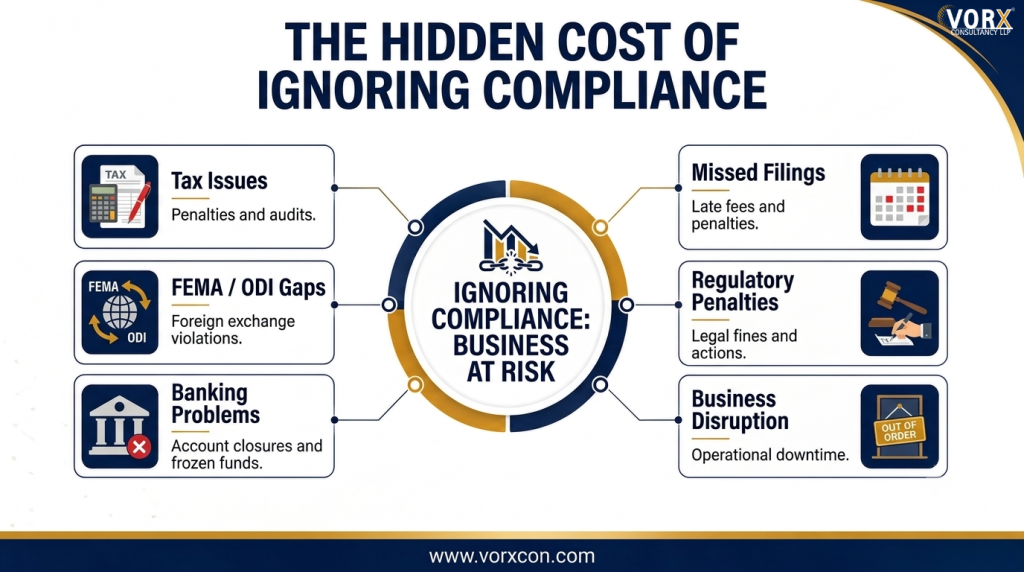
Paperwork is often where an otherwise straightforward incorporation gets delayed. Depending on the country and structure, you may need identification documents, address proof, PAN details, business information, shareholder details and beneficial ownership information.
You may also need additional corporate documents if an existing Indian company is investing in the foreign entity. Your documents for overseas company registration will depend on the destination country, so don’t rely on a generic checklist found online.
Prepare the documents only after confirming what the foreign registry, bank and relevant Indian authorities actually require.
6. Understand the Tax Impact Before Incorporation
A foreign company can create tax considerations in both countries. Before proceeding, review the tax implications of overseas company registration, including the treatment of foreign income, dividends, capital gains and transactions between the Indian and overseas businesses.
For eligible taxpayers, foreign assets and foreign-source income may also need to be disclosed in the appropriate Indian income-tax return schedules. The Income Tax Department specifically identifies foreign equity/debt interests and financial interests in overseas entities among the foreign assets covered by Schedule FA.
The important point is simple: don’t wait until tax filing season to think about your overseas company.
Recommended Reading:
Before starting your overseas setup, it is also worth understanding the common company formation mistakes entrepreneurs should avoid when registering a business abroad.
7. Consider Where the Company Is Actually Managed
Choosing a foreign registered address does not automatically settle every Indian tax question. If important business decisions, strategic control and management are effectively being carried out from India, there may be additional tax considerations depending on the facts and applicable rules. For this reason, entrepreneurs should think about more than just the country of incorporation.
Ask yourself:
Where will the business actually operate? Who will manage it? Where will key decisions be made?
These questions can be important when building a long-term international structure.
8. Check the Foreign Country's Ongoing Requirements
Every jurisdiction has its own overseas company formation requirements, and many continue after the company receives its incorporation certificate. Depending on the country, you may have to manage:
- Annual returns
- Corporate tax filings
- Accounting records
- Beneficial ownership filings
- Local registered-office requirements
- VAT or similar indirect taxes
- Business licences
- Payroll obligations
9. Plan Your Banking and Money Flow
Before choosing the jurisdiction, consider whether you can realistically open a suitable business bank or payment account for the company’s activities. Think about how money will move between India and the foreign company, including initial capital, business payments, dividends, service fees or other legitimate transactions.
The banking structure should support your business model rather than become an obstacle after incorporation.
Recommended Reading:
If you’re still exploring the registration process, read our Guide to Registering a Company Abroad in 2026 for a broader overview of international company formation.
Build a Compliance Calendar Before You Incorporate
Instead of rushing to handle compliance after company registration is complete, it is better to prepare a compliance calendar in advance. This helps you understand what needs to be maintained, reported, or filed in both India and the foreign country. A simple calendar can help you stay organised and avoid missing important deadlines.
Area | Key Things to Track |
India | FEMA/ODI reporting and applicable tax disclosures |
Foreign Country | Annual filings, tax returns and company records |
Ownership | Beneficial ownership updates, where applicable |
Banking | Account documentation and transaction requirements |
Ongoing | Licences, renewals and inter-company transactions |
The exact requirements will depend on your business structure and destination country, so your calendar should be prepared around your specific setup not a generic checklist.
How Vorx Helps with Overseas Company Compliance
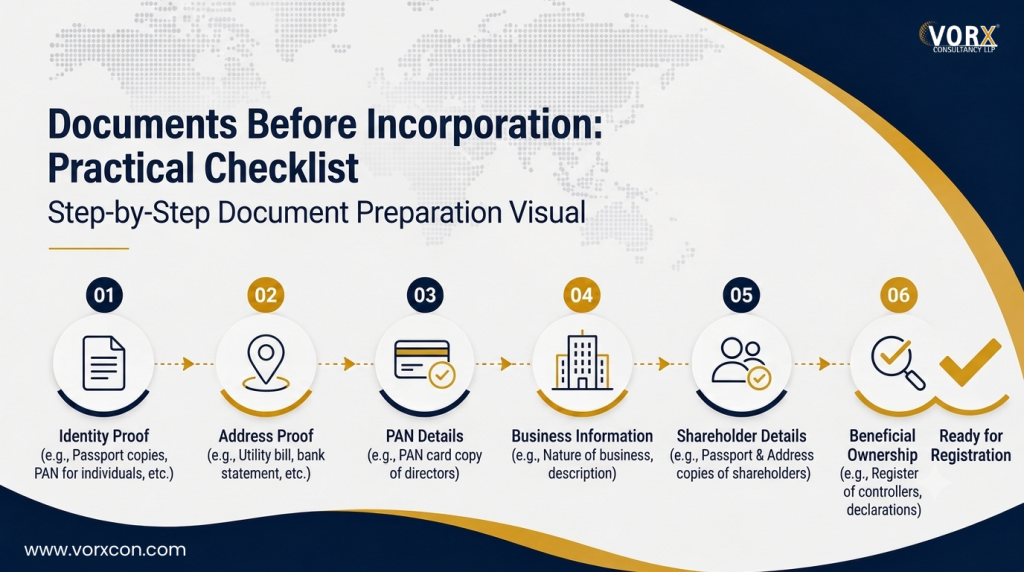
Registering a company abroad from India involves more than completing an incorporation form. You also need to understand the Indian compliance side, the destination country’s requirements, documentation, tax considerations and ongoing obligations.
Vorx Consultancy helps entrepreneurs plan these requirements before they start the registration process. From choosing a suitable jurisdiction and understanding the setup structure to coordinating documentation and compliance requirements, our approach focuses on building a smoother path for international expansion.
Planning to register a company abroad from India? Connect with Vorx Consultancy for expert guidance.
Book a Strategy Call: (Calendly Link)
Visit: www.vorxcon.com
Email: support@vorxcon.com
Final Thoughts
Going global can be a major opportunity for an Indian entrepreneur, but international expansion works best when compliance is considered from day one.
Before starting your overseas business setup from India, look beyond the incorporation certificate. Review the Indian investment rules, destination-country requirements, tax position, banking arrangements and ongoing filing responsibilities. A little planning before registration can help you avoid much bigger compliance problems later.
If you’re considering overseas expansion and want to understand the requirements for your proposed structure, Vorx Consultancy can help you assess the setup before you begin the incorporation process.
