


Yes, You can build an international business without moving out of India. Many Indian entrepreneurs start a company abroad from India, retain ownership, and manage day-to-day business activities remotely while continuing to live in India.
But setting up an overseas company is only the first step. Once the business is operational, questions around Indian taxation, foreign exchange regulations, reporting and the company’s place of effective management become important.
The real question, therefore, is not simply whether you can own a foreign company from India, but how you can operate it from India without creating avoidable tax or compliance issues. This guide explains the key requirements Indian entrepreneurs should understand before managing an overseas business remotely.
Can You Run a Foreign Company from India?
Yes, in many cases, an Indian resident can own a foreign company from India and manage its business remotely. However, the way the company is managed matters as much as where it is incorporated. For example, an entrepreneur may handle strategy, client communication and business coordination from India while the company maintains its registered office, local records and required operations overseas.
The important consideration is whether the company’s key management and commercial decisions are effectively being made from India. This can become relevant under India’s POEM framework and may affect the company’s Indian tax position.
Key Requirements Before Operating From India
Area | What to Check |
Business structure | Choose an entity suitable for ownership and operations |
Jurisdiction | Check local corporate, tax and substance requirements |
Indian regulations | Review FEMA, RBI and applicable tax rules |
Management | Clearly define where important decisions are made |
Banking | Maintain proper business banking and transaction records |
Compliance | Track both Indian and foreign filing obligations |
The objective is to create a structure that works commercially while remaining compliant in both jurisdictions.
How to Set Up and Run the Foreign Company From India?
1. Select the jurisdiction
Choose the country based on your target market, business activity, ownership rules and compliance requirements.
2. Choose the company structure
Decide whether an LLC, private limited company, subsidiary or another structure is appropriate for the business.
3. Complete incorporation
Submit the required information, verify shareholders and directors, and complete the local registration process.
4. Set up banking and accounting
Establish suitable business banking and bookkeeping arrangements before starting regular transactions.
5. Plan remote management
Define responsibilities, decision-making processes and local support so the company can be effectively managed without unnecessary regulatory exposure.
In practice, many routine functions can be handled from India, but the company must continue meeting the legal and compliance requirements of its country of incorporation.
What Documents Are Required?
The exact requirements vary by country, but documents for overseas company setup commonly include:
- Passport or government-issued ID
- Residential address proof
- Shareholder and director details
- Proposed company name and business activity
- Incorporation and ownership documents
- Business or source-of-funds information
Additional documents may be required for banking, beneficial ownership checks or local regulatory filings.
Tax Implications: The Point Indian Entrepreneurs Must Not Ignore
Running an overseas company while remaining an Indian resident requires tax planning in both jurisdictions. The company’s incorporation country may impose corporate tax and filing obligations, while India may have tax and reporting implications for the Indian owner and, in certain circumstances, the foreign company itself.
Foreign Income and Indian Tax
Indian tax treatment can depend on the individual’s residential status, nature of income, ownership structure and the applicable provisions of Indian tax law. Foreign income and investments may also need to be appropriately disclosed in the relevant Indian tax filings.
POEM and Foreign Company Tax Residency
The POEM rules for foreign companies are particularly important when significant management decisions are taken from India. POEM focuses on where the key management and commercial decisions necessary for the business as a whole are, in substance, made.
Therefore, simply incorporating a company overseas does not by itself determine its tax residency. The actual management arrangement and surrounding facts matter.
Double Taxation Considerations
If income is potentially taxable in both countries, the relevant tax treaty and available relief mechanisms should be reviewed. Professional tax advice can help determine how the structure should be reported and managed.
For this reason, foreign company tax residency in India should be assessed before establishing a management model rather than after the business has already started operating.
Recommended Reading:
If you are still deciding where to incorporate, explore our guide to the cheapest countries for Indians to start a business abroad before choosing a jurisdiction.
What is the Annual Compliance Checklist?
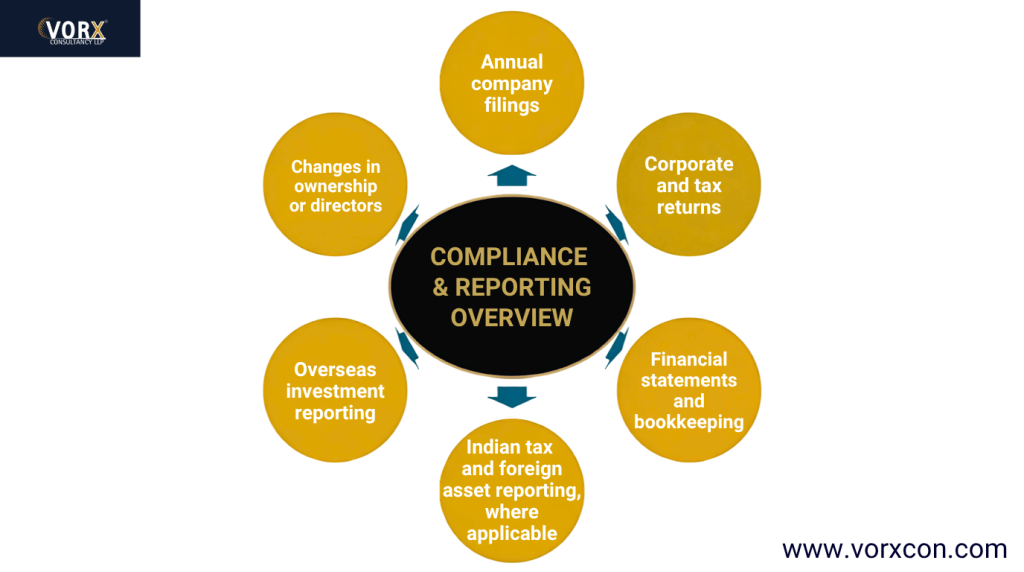
What FEMA & RBI Rules Apply When Running a Foreign Company From India?
If an Indian resident invests in or owns an overseas business, the transaction may fall under India’s overseas investment framework. This makes FEMA rules for overseas business an important part of the setup process.
Overseas Investment
Indian residents generally need to consider the applicable rules before making an investment in a foreign entity. The nature of the investment, ownership structure and type of overseas activity can affect the applicable requirements.
RBI Reporting
Certain overseas investments may involve reporting through the prescribed banking and regulatory channels. Documentation should be maintained for investments, remittances and subsequent changes in the overseas entity.
Banking Route
Funds should be transferred through appropriate authorised channels, with the purpose and supporting documentation properly recorded. Entrepreneurs should avoid treating overseas business investment as an informal personal transfer.
Ongoing Changes
Additional compliance may arise when there is a change in shareholding, transfer of investment, restructuring or other material changes to the overseas business.
Because RBI rules for overseas investment and FEMA requirements can depend on the specific transaction, they should be reviewed before funds are transferred or the ownership structure is changed.
Recommended Reading:
Before incorporating, review our compliance checklist for registering a company abroad to understand the key Indian and overseas requirements you should consider.
What Common Mistakes Should Company Owners Avoid?
Several problems arise when entrepreneurs focus only on incorporation and overlook the ongoing relationship between India and the overseas entity. The most common mistakes include:
- Selecting a jurisdiction without considering Indian tax implications
- Making all major management decisions from India without reviewing POEM
- Missing FEMA or overseas investment reporting
- Mixing personal and company finances
- Ignoring annual compliance after incorporation
- Assuming an overseas company automatically means no Indian tax exposure
A well-planned structure can reduce these risks and make remote management considerably easier.
How Vorx Supports Foreign Business Operations From India?
For entrepreneurs planning an overseas business for Indian residents, managing incorporation, taxation, compliance and cross-border requirements can quickly become complicated.
Vorx Consultancy supports Indian entrepreneurs with international company formation and related cross-border requirements, helping coordinate the practical steps involved in establishing and maintaining an overseas business.
From selecting an appropriate jurisdiction to coordinating incorporation and ongoing compliance requirements, the focus is on building a structure that supports the entrepreneur’s international business objectives while considering the Indian regulatory environment.
Planning to run a foreign company from India? Talk to Vorx Consultancy
Book a Strategy Call: (Calendly Link)
Visit: www.vorxcon.com
Email: support@vorxcon.com
Final Thoughts
You do not necessarily have to relocate to operate an international business. With the right structure, an Indian entrepreneur can operate an overseas business from India while continuing to manage many functions remotely.
However, overseas incorporation should be planned alongside Indian tax, POEM, FEMA and RBI considerations. The strongest structure is not simply the one that is easiest to establish—it is the one that remains practical, compliant and sustainable as the business grows.
