

After registering your company with the authorities, you will be opening a business bank account. To do that, you will need to submit your certificate of incorporation. At this point, many entrepreneurs realize that this registration document is not just a formality. It is the proof of incorporation of a company. Knowing the meaning of this document will help to avoid some problems in the future in relation to banking, business relationships, and foreign expansion.
What Is a Certificate of Incorporation?
A certificate of incorporation is an official document that provides proof of incorporation of a company. It confirms that the company has been set up according to the laws of the jurisdiction where this has taken place.
It contains basic information about the name of the company, its registration number, and date of registration. Different countries may have different policies regarding the contents and format of this document.
Companies need it for opening bank accounts, registering their companies, and verifying the information needed by customers, partners, and investors. However, this document cannot replace the business operating license and does not prove that a company meets all operating requirements.
Ready to take your business beyond borders? Explore company formation, banking support and compliance services with Vorx Consultancy
What Information Does It Contain?
A certificate commonly records:
- The company’s registered name.
- Its registration or identification number.
- The date of incorporation.
- The issuing authority’s seal, signature or authentication.
Do not assume it contains your current directors, shareholders or registered address. Those details may appear in separate registry records or a business profile.
Recommended Reading:
“Before submitting your incorporation application, review our compliance checklist before registering a company abroad to understand the requirements beyond registration.”
Why Does Your Business Need It?
The certificate provides organisations with a way of verifying your company’s incorporation. You might experience situations in which you are asked for it.
- Business banking and finance: Your banks and lenders might request the certificate as part of their documentation checks. Companies House specifically mentions bank accounts, loan applications and company sales as situations in which it may be needed.
- Client and supplier onboarding: A prospective partner may ask for incorporation evidence before approving your company as a vendor or signing a significant agreement.
- Investor due diligence: Investors need to identify the legal entity in which their money will go, and incorporation documents are part of this review, along with ownership and financial records.
- Registrations and overseas transactions: Authorities might ask for evidence of your incorporation when assessing an application or registering your company’s presence abroad.
Ready to take your business beyond borders? Explore company formation, banking support and compliance services with Vorx Consultancy
How Do You Obtain a Certificate of Incorporation?
The main way of obtaining the certificate is through the company incorporation process. The requirements will depend on the country and structure you choose
- Choose Your Company Structure
Decide what you want your company to be, such as a private limited company or a corporation. The structure will define your registration requirements and formation documents.
- Select and Check Your Company Name
Check the proposed name against the company registry and reserve it if applicable. This step might be separate in the jurisdiction you are targeting.
- Prepare the Required Documents
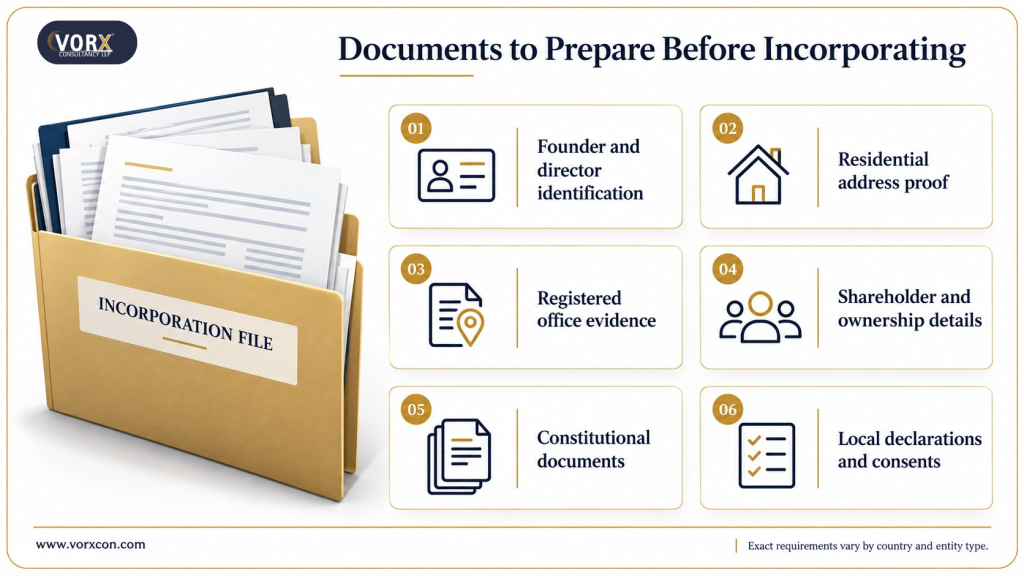
The appropriate identification and address proofing documents for the relevant founders, directors or shareholders, and the registered office information, will need to be gathered. You will also need to prepare the constitutional documents you need to register locally, like articles of association or a company constitution.
- Submit the Incorporation Application
Submit the application and supporting documents to the relevant registry and pay the applicable fees. Ensure that names, addresses and ownership details are consistent in all the paperwork you submit.
- Complete the Registry’s Review
Answer any request for correction or additional information the registry might make. Providing incomplete documentation or inconsistent details can prolong the approval process.
- Receive or Request Your Certificate
Once you have incorporated, receive or request your certificate or equivalent formation record. Companies House, for example, issues a certificate following registration — the procedure may differ in other countries. Double-check its details and save a secure copy
Ready to take your business beyond borders? Explore company formation, banking support and compliance services with Vorx Consultancy
What Should You Do After Receiving It?
After you have received your certificate of incorporation, you should ensure that it has the correct company name, registration number and incorporation date. If you notice any errors, contact the registry or your incorporation adviser before relying on this document.
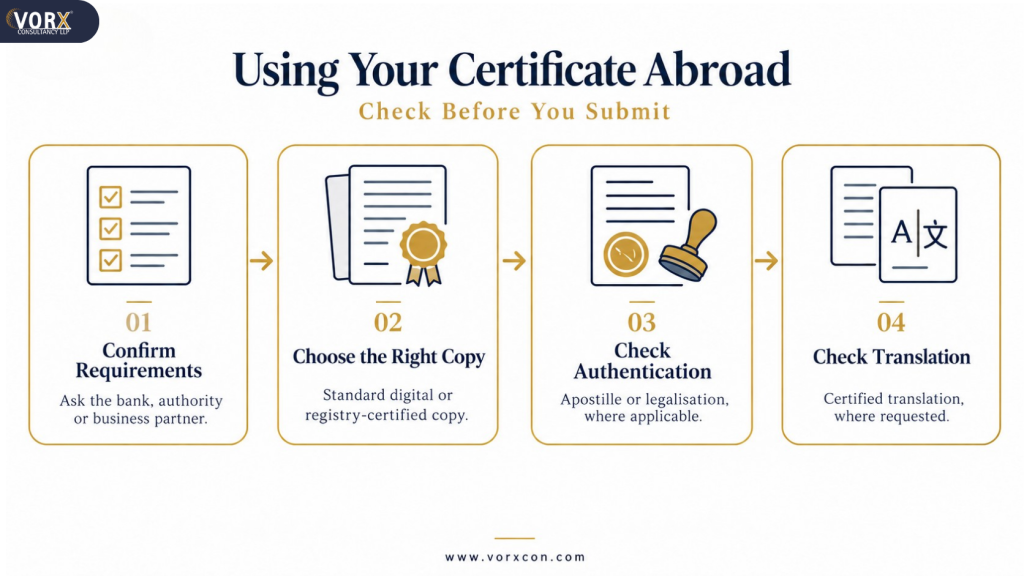
- Make sure to keep your company documents organised, and remember to save a secure digital copy of the certificate and your other constitutional documents and ownership records. Check whether banks or overseas authorities require a certified copy or additional authentication.
- Get ready to open a business bank account by collecting the documents the bank requires you to provide. The documents may include director identification, ownership details and source-of-funds evidence. The incorporation certificate will be part of the application, but it does not guarantee approval.
- Make sure to complete all applicable registrations and licences. You need to identify the tax registrations, business licences and other applicable approvals your company needs to register before engaging in any relevant activities.
- Set up accounting and a compliance calendar. This means recording all transactions from the beginning and tracking filing deadlines, accounting obligations and any initial corporate formalities required by your local authorities.
Recommended Reading:
“Once your company is incorporated, explore how to open a business bank account abroad without traveling and the supporting documents banks may request.”
How Vorx Can Help with Company Incorporation?
When considering where and how to incorporate, your plans for the business should be the starting point. This means considering where your clients are, how you expect to receive payment, and what responsibilities you will have to ongoing operations.
Vorx can assist you in identifying the most appropriate jurisdictions and structures, preparing your incorporation documents and facilitating registration. We can also advise on matters such as the banking documentation and compliance requirements that you will need to deal with after incorporation
Whether you are launching a new venture or looking to expand internationally, our company formation expertise can be applied to meet the real-world requirements of your business.
Planning to incorporate your business? Let Vorx Consultancy guide you.
Book a Strategy Call: (Calendly Link)
Visit: www.vorxcon.com
Email: support@vorxcon.com
Final Thoughts
A certificate of incorporation is a document that you will need to present and/or retain for future reference when opening bank accounts, engaging business partners or establishing overseas operations. Keep the certificate in a secure place and understand what further actions may be required at specified intervals
For founders, it is essential to think beyond incorporation. The right preparations in relation to banking, accounting, and compliance can facilitate growth and prevent disruptions to your business plans.
