

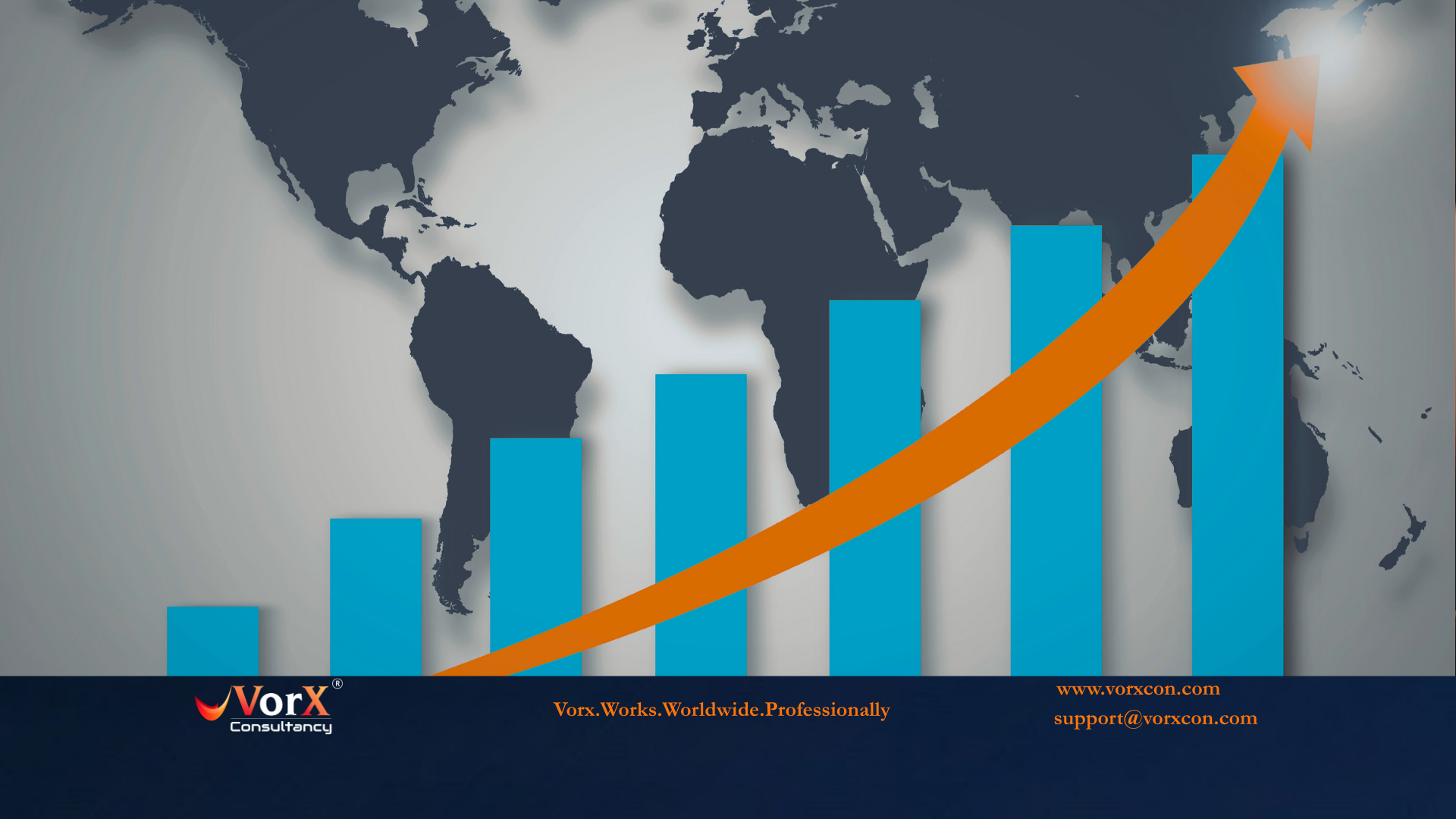
In today’s interconnected global economy, growth is no longer limited by geography. Businesses that look beyond domestic borders unlock new profits streams, broader customer bases, and long-term resilience. However, successful international growth doesn’t happen by chance—it needs a carefully designed global expansion strategy.
At Vorx Consultancy, we help businesses expand internationally with clarity, compliance, & confidence. Whether you’re a fast-scaling startup or a documented enterprise, the right strategy guarantees global expansion becomes a growth engine—not a risk factor.
Vorx Consultancy Pro Tip:
Global increase is not about speed—it’s about sustainability.
What Is a Global Expansion Strategy?
A global increase strategy is an organized plan that defines where, how, & when a business should enter international markets. It aligns market selection, entry models, submission, procedures, & branding into one unified roadmap.
For Vorx Consultancy, global expansion means:
- Strategic market selection
- Risk-aware entry planning
- Local compliance from day one
- Scalable operations and governance
Vorx Consultancy Pro Tip:
The best expansion strategies are built before entering the market—not after facing problems.
Step-by-Step Guide to International Business Expansion
1. Define Clear Expansion Goals
Every expansion must begin with purpose. Understanding why you are expanding shapes every strategic decision that follows.
Common expansion objectives include:
- Entering new customer markets
- Increasing global brand visibility
- Diversifying income sources
- Reducing reliance on one economy
At Vorx Consultancy, we reassure setting clear KPIs such as revenue targets, market share, or customer attainment goals.
Vorx Consultancy Pro Tip:
Vague goals lead to expensive mistakes. Precision creates momentum.
2. Conduct In-Depth Market Research
Market research is the support of effective global expansion. It prevents expectations from turning into losses.
Key research areas include:
- Market demand & growth potential
- Consumer behavior & cultural norms
- Competitive intensity
- Pricing sensitivity
- Economic and political stability
Combining data with on-ground insights helps businesses avoid overestimating opportunity.
Vorx Consultancy Pro Tip:
If you don’t understand the local customer, the market isn’t ready—you aren’t.
3. Choose the Right Market Entry Strategy
Different markets necessitate different entry approaches. The right model depends on capital convenience, risk tolerance, & long-term goals.
Common entry strategies:
- Exporting
- Licensing or franchising
- Strategic partnerships or joint ventures
- Mergers & acquisitions
- Greenfield investments
At Vorx Consultancy, we often recommend partner-led entry in early stages to decrease regulatory & cultural friction.
Vorx Consultancy Pro Tip:
The smartest entry strategy is the one that preserves flexibility.
4. Adapt Products and Services for Local Markets
Global brands succeed when they feel local. Even proven offerings often need adjustment.
Areas that commonly require localization:
- Product features or packaging
- Language & messaging
- Pricing structures and payment methods
- Customer service expectations
Global success lies in balancing consistency with cultural importance.
Vorx Consultancy Pro Tip:
Customers don’t buy global brands—they buy local solutions.
5. Understand Legal and Regulatory Requirements
Compliance is one of the most underestimated aspects of global expansion. Each country has unique regulations around:
- Company incorporation & licensing
- Corporate and indirect taxes
- Employment and labor laws
- Data protection and privacy
- Import/export controls
Vorx Consultancy helps businesses address regulatory requirements before market entry to avoid penalties and delays.
Vorx Consultancy Pro Tip:
Compliance issues rarely appear immediately—but they always appear ultimately.
6. Build a Scalable Global Operations Model
A scalable operational foundation is critical for long-term success.
Key operational focus areas:
- Supply chain and logistics
- Technology & reporting systems
- Cross-border payments
- Hiring and managing global teams
Cloud-based tools and standardized workflows allow businesses to scale efficiently across regions.
Vorx Consultancy Pro Tip:
If operations can’t scale, growth will stall.
7. Develop a Strong Global Brand Strategy
A global brand must be consistent—but culturally intelligent.
Effective global branding includes:
- A unified brand identity
- Market-specific marketing campaigns
- Regionally relevant digital channels
- Trusted local partners
A strong brand accelerates trust in unfamiliar markets.
Vorx Consultancy Pro Tip:
Recognition attracts customers. Trust keeps them.
8. Monitor Performance and Optimize Continuously
Global expansion is an ongoing process, not a one-time launch.
Key metrics to track:
- Revenue and profitability by region
- Customer retention and feedback
- Operational efficiency
- Regulatory or market changes
At Vorx Consultancy, we emphasize continuous optimization based on real-world performance.
Vorx Consultancy Pro Tip:
Expansion success depends on constant course correction.
Common Challenges in Global Expansion (and How to Overcome Them)
| Challenge | How to Overcome |
| Cultural differences | Invest in local expertise |
| Regulatory complexity | Work with compliance professionals |
| High setup costs | Start lean and scale gradually |
| Brand inconsistency | Establish global brand guidelines |
Vorx Consultancy Pro Tip:
Most expansion challenges are predictable—and solvable.
Final Thoughts: Expanding Globally with Confidence
Successful global expansion is rarely about speed alone. It’s about clarity of purpose, disciplined planning, and the ability to adapt to new markets without losing operational control. Companies that scale across borders with confidence do so by combining strategic foresight with local understanding and structures built to grow.
At Vorx Consultancy, we help businesses cross borders with intention—designing expansion strategies that are compliant, resilient, and built for long-term success.
Ready to expand globally with Vorx Consultancy?
Let us know if you want this guide customized for a specific country, industry, or expansion model.
