
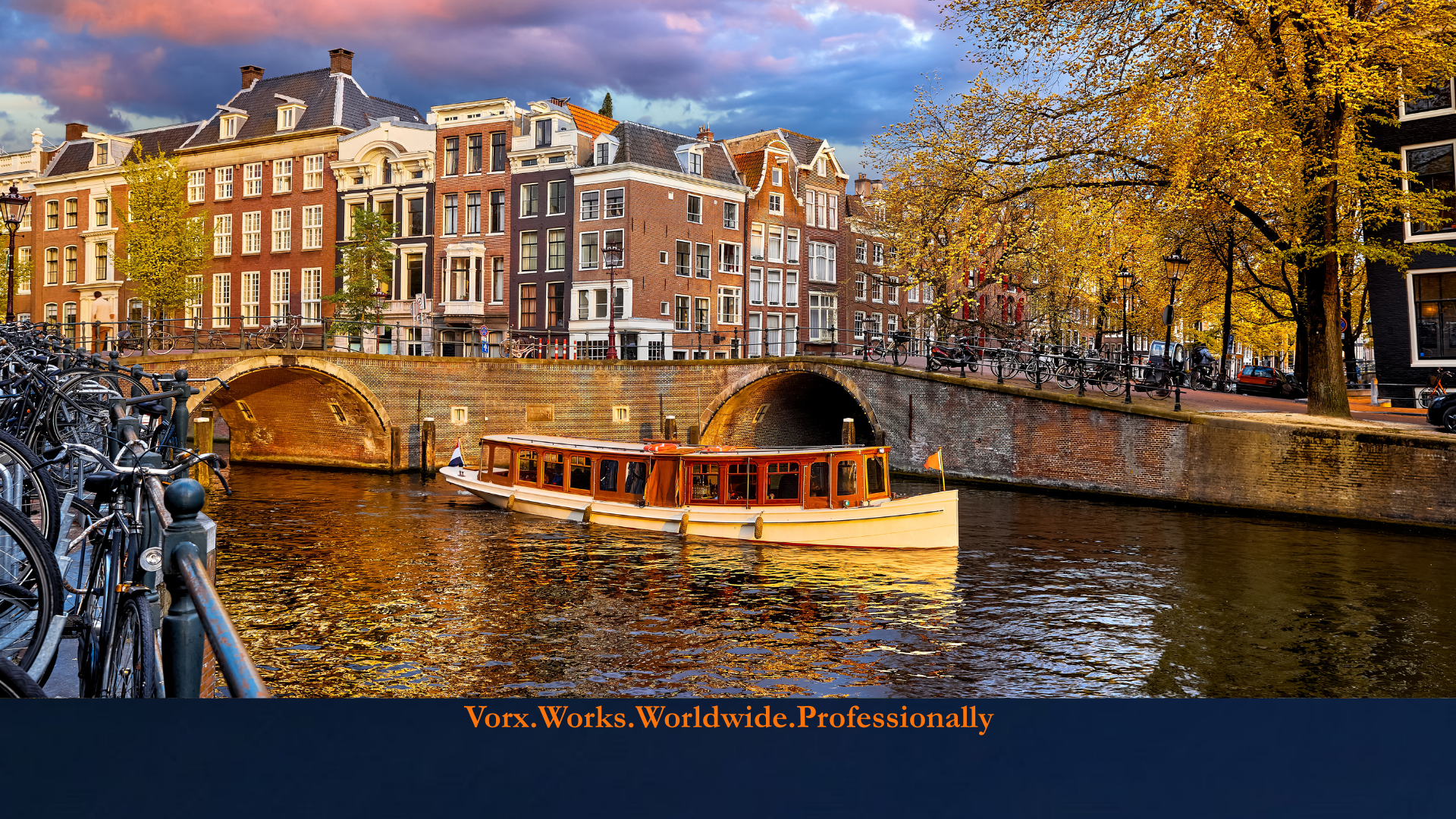
In 2026, the Netherlands will continue to stand at the center of Europe’s entrepreneurial map. Amsterdam remains a technology gateway, Rotterdam anchors logistics & trade, & cities like Utrecht, Eindhoven, & The Hague are rapidly strengthening innovation ecosystems. Entrepreneurs relocating from Asia, the Middle East, North America, and other parts of Europe increasingly see the Netherlands not simply as a place to start a Business — but as a strategic base for operating within the European Union.
However, long before founders open bank accounts, hire employees, or secure office space, a more foundational decision quietly determines how the entire venture will operate: which legal structure to choose.
In the Dutch system, two of the most common forms for entrepreneurs are the Besloten Vennootschap (BV) & the Eenmanszaak (sole proprietorship). At first glance, these might appear to be simple administrative labels — choices that can be adjusted later if necessary. In reality, they represent Very Different Legal, Financial, & Compliance Frameworks, & the consequences of choosing the wrong structure can affect taxation, immigration eligibility, liability exposure, investor readiness, & long-term scalability.
For foreign founders especially, the complexity deepens further. Business structuring decisions often interact with Immigration Pathways, regulatory expectations, & tax planning considerations. The wrong sequence — establishing a company before clarifying immigration eligibility, or choosing a structure incompatible with long-term strategy — can lead to expensive restructuring or regulatory friction.
This article provides a structured, strategic guide to understanding the difference between a Dutch BV & an Eenmanszaak (sole proprietorship) in 2026. It is written not as a marketing piece, but as an expert briefing for founders, combining Legal Insight, operational guidance, & practical experience advising International entrepreneurs.
The objective is simple: to help you understand not only which structure is easier to start, but which structure is strategically correct for your long-term plans.
Understanding the Two Core Structures
Before comparing advantages &disadvantages, it is important to understand the Legal nature of these two Business forms.
An Eenmanszaak (sole proprietorship), often translated as a “sole proprietorship,” is the simplest business structure available in the Netherlands. It is designed for individuals who operate businesses on their own account. In this model, the entrepreneur and the business are legally the same entity. There is no separation between personal identity and commercial activity.
This simplicity is the reason why many freelancers, consultants, and independent professionals initially choose an sole proprietorship. Registration is quick, the administrative burden is relatively light, and there are fewer formal corporate requirements.
However, this simplicity also introduces one of the most important structural characteristics of an Eenmanszaak (sole proprietorship): the entrepreneur is personally responsible for all obligations of the business.
A Besloten Vennootschap (BV), by contrast, is a private limited company under Dutch corporate law. Unlike an Eenmanszaak (sole proprietorship), a BV is a Separate Legal Entity, meaning the company itself owns assets, enters contracts, & bears liability for its activities.
One of the distinguishing features of corporate systems around the world is this division between the founder and the business. As long as corporate governance guidelines are followed, it enables companies to expand, obtain money, or sign important contracts without revealing the founder’s personal holdings.
From a purely structural perspective, the difference between these two forms is profound. One represents Individual Entrepreneurship, while the other represents Corporate Enterprise.
Vorx Pro Tip
Immigration Eligibility should always be clarified before finalizing your company structure.
Choosing the wrong entity too early can complicate Residence permit approvals.
Why This Decision Matters More for Foreign Founders
For entrepreneurs already residing in the Netherlands, choosing a structure is primarily a legal and financial decision. For international founders, however, the stakes are significantly higher.
Immigration pathways such as the Dutch Startup Visa, the Self-Employment Residence Permit, & certain entrepreneur visas often require authorities to evaluate whether the proposed business activity has genuine economic value for the Netherlands. In such assessments, immigration authorities do not simply review business plans; they also look at the credibility & sustainability of the legal structure supporting the venture.
A project’s seriousness or scalability may occasionally be called into question by an excessively basic framework. On the other hand, creating a complicated company structure too early may result in compliance burdens that are challenging to manage while still completing immigration procedures.
In reality, one of the most frequent places where founders make blunders is when immigration strategy & business structure interact..
Because they Believe a corporation structure is Inherently more professional, several entrepreneurs incorporate a BV right away. Others start with an Eenmanszaak (sole proprietorship) structure without understanding that their Long-Term strategy, such as employing employees or increasing investment, can call for corporate governance structures that are simpler to set up right away.
The optimal decision therefore depends not only on legal rules, but also on Timing, Immigration Sequencing, & Strategic Planning.
Vorx Pro Tip
Immigration first, structuring second — not the other way around.
Your entity choice must support your residence strategy.
Liability: The Structural Difference That Shapes Everything
One of the most important distinctions between an Eenmanszaak (sole proprietorship)& a BV concerns liability.
In an Eenmanszaak (sole proprietorship), the business has no Legal existence separate from the individual operating it. This means that if the Business accumulates debts, fails to pay suppliers, or faces legal claims, creditors can pursue the personal assets of the entrepreneur.
Savings, investments, & possibly even personal property are all included in this exposure, depending on the situation. Liabilities may also impact shared household assets in cases when the entrepreneur is married under specific marital property regimes.
This degree of liability might not be a major worry for independent consultants or small freelancers with little financial risk. However, the dangers rise dramatically when a Business expands, especially when it comes to signing contracts, hiring employees, or buying merchandise.
A BV, on the other hand, introduces a layer of protection through Limited Liability. Because the company is a separate legal entity, debts & legal claims are generally confined to the assets owned by the company itself. In principle, creditors cannot automatically pursue the personal wealth of shareholders.
However, this protection is not absolute. Dutch corporate law imposes strict responsibilities on company directors. If a director engages in Improper Management, fails to maintain accurate records, or knowingly allows the company to operate while insolvent, courts may determine that the director should be held personally liable.
Similarly, when entrepreneurs personally guarantee loans or sign certain financial agreements, they may voluntarily assume personal liability regardless of the company structure.
Therefore, while a BV offers significant protection compared to an Eenmanszaak (sole proprietorship), it also requires Careful Governance & Responsible Management.
Vorx Pro Tip
Limited liability works only when corporate governance rules are respected.
Ignoring statutory duties can expose directors personally.
Taxation: Simplicity Versus Strategic Flexibility
Another major factor influencing the choice between an Eenmanszaak (sole proprietorship) and a BV is taxation.
In an Eenmanszaak (sole proprietorship), the business does not pay corporate tax. Instead, profits are treated as the personal income of the entrepreneur. The individual reports these profits through the Dutch income tax system.
The Netherlands offers certain tax advantages for self-employed individuals, particularly during the early years of business activity. These may include deductions designed to encourage entrepreneurship & support smaller operations.
While these incentives can make the Eenmanszaak (sole proprietorship) attractive for entrepreneurs with relatively modest income levels, the structure has limitations. As profits grow, income tax rates increase progressively. At higher levels of profitability, the effective tax burden may become higher than what a corporate structure could offer.
A BV introduces a different tax framework. The company itself pays Corporate Income Tax on its profits. The entrepreneur, acting as a director and shareholder, typically receives compensation in the form of salary & potentially dividends.
This system allows for greater flexibility in Profit Distribution & Long-Term Planning. Profits can be retained within the company to finance growth, invest in assets, or support future expansion before being distributed to shareholders.
For entrepreneurs who anticipate rapid growth, significant profits, or international expansion, this flexibility can be extremely valuable.
However, it also introduces additional complexity, including payroll obligations, dividend taxation considerations, & corporate accounting requirements.
Vorx Pro Tip
Structure decisions should reflect multi-year profit forecasts, not short-term income.
Early simplicity can create long-term tax inefficiency.
Administrative and Compliance Responsibilities
Administrative obligations represent another key difference between the two structures.
An Eenmanszaak (sole proprietorship) is widely regarded as one of the simplest ways to operate a business in the Netherlands. After registering with the Kamer Van Koophandel (KvK), the entrepreneur can begin trading almost immediately. Record-keeping & tax filings are still required, but the level of formal governance is relatively limited.
This simplicity is one of the main reasons freelancers, consultants, & small service providers frequently choose this structure during the early phase of their activities.
A BV, by contrast, requires a much more formal organizational framework. The company must be incorporated through a Notarial Deed, & it must maintain formal corporate records.
In addition to standard accounting obligations, a BV must prepare annual financial statements and comply with various governance rules, including shareholder decisions and director responsibilities.
For founders unfamiliar with corporate administration, these obligations may initially appear burdensome. However, they also bring a degree of transparency and credibility that can be advantageous when dealing with banks, investors, & institutional partners.
Corporate governance structures provide Predictability & Sccountability, which are often prerequisites for scaling businesses beyond the early stage.
Vorx Pro Tip:
Corporate compliance is not bureaucracy — it is the infrastructure that supports growth.
Build systems early rather than correcting mistakes later.
Investor Readiness and Growth Potential
For founders who plan to scale their businesses, the ability to attract capital and collaborate with partners is often decisive.
An Eenmanszaak(sole proprietorship) is fundamentally designed for Individual Entrepreneurship. Because the business and the owner are legally inseparable, it is difficult to introduce shareholders, issue equity, or formally distribute ownership interests.
While partnerships and collaborations are possible through contractual arrangements, the structure itself does not easily support investment.
A BV, on the other hand, is specifically designed to accommodate Shareholders & Investors. Ownership is represented through shares, which can be transferred or allocated among partners.
This framework makes it possible to raise capital, bring in strategic partners, or even sell portions of the business in the future. It also facilitates succession planning and long-term ownership transitions.
For entrepreneurs who envision building a company that extends beyond a solo operation — perhaps employing staff, attracting venture capital, or expanding internationally — the BV structure offers a far more adaptable platform.
Vorx Pro Tip
If external investment is part of your roadmap, corporate structure is essential.
Equity financing requires a legal entity designed for ownership distribution.
Strategic Advisory Opportunity
If you are evaluating business structuring alongside immigration planning in the Netherlands, the decision should not be made in isolation.
You can book a structured strategy consultation here
Additional insights and founder resources are available at:
www.vorxcon.com
Operational Reality: Converting from Eenmanszaak (sole proprietorship) to BV
Some entrepreneurs choose to begin with an Eenmanszaak (sole proprietorship) and convert to a BV later. While this is legally possible, the process is not always straightforward.
Transferring assets, contracts, and operations into a corporate structure can involve legal and tax considerations. In certain cases, the transition may trigger tax consequences or require careful valuation of business assets.
Furthermore, business relationships established under the sole proprietorship may need to be renegotiated under the new corporate entity.
This means that although conversion remains an option, founders should not assume that restructuring later will be effortless. Planning ahead often reduces both cost and complexity.
Vorx Pro Tip:
Entity conversion is possible but rarely effortless.
Planning structure early prevents disruptive restructuring later.
When Each Structure Makes Strategic Sense
In practical terms, the decision often depends on the scale and ambition of the business.
An Eenmanszaak (sole proprietorship) can be appropriate when the entrepreneur:
• operates independently with minimal financial risk
• provides consulting or freelance services
• expects relatively modest income levels initially
• prioritizes simplicity over corporate scalability
A BV becomes more attractive when the founder:
• plans to hire employees or expand operations
• expects significant revenue growth
• intends to attract investors or partners
• wants to limit personal financial exposure
These scenarios are not rigid rules, but they illustrate how structural choices align with different entrepreneurial paths.
Structured Planning Support
If you are planning to establish a company in the Netherlands and want clarity on the optimal structure for your situation:
Book a Strategy Call
Visit www.vorxcon.com for additional resources and founder guides.
Final Strategic Reinforcement
Choosing between a BV and an Eenmanszaak (sole proprietorship) is not merely an administrative formality. It is a decision that shapes liability exposure, tax planning, immigration alignment, compliance obligations, and long-term growth potential.
For founders entering the Dutch market in 2026, the most important principle is this:
Structure should follow strategy — but it must also respect immigration sequencing and regulatory expectations.
Entrepreneurs who approach structuring thoughtfully create a stable platform for expansion. Those who rush the decision often discover that restructuring later introduces complexity that could have been avoided through careful planning.
The Netherlands offers one of Europe’s most supportive environments for entrepreneurship, but success requires clarity, preparation, and compliance discipline.
The right legal structure will not guarantee success — but the wrong one can certainly create unnecessary obstacles.
Next Steps
If you want a structured roadmap for your Netherlands business and immigration strategy:Strategy Call:www.calendly.com/vorxconsultancy
Website: www.vorxcon.com