


International company registration has outgrown its old reputation as paperwork.
Today, it is much more than this, influencing global expansion, corporate banking, tax planning, investor confidence, and overall business sustainability.
Regardless of your business type whether you are a startup founder, exporter, manufacturer, consultant or established enterprise, the right international company formation strategy may help build strong foundations for your business growth.
Whether you’re a founder scaling for the first time, an exporter chasing new markets, a manufacturer setting up production abroad, or an established business planning its next move, getting the formation strategy right lays the groundwork for sustainable growth.
Reasons for Registering a Company Abroad
Markets don’t stop at borders anymore, and businesses know it. Registering abroad gives an organization a genuine local footprint, sharper credibility with international clients, and room to maneuver operationally in the markets that matter most.
That said, founders often assume international formation is a tax exercise. It isn’t primarily. The real strategic value comes from picking a jurisdiction that fits your business objectives, satisfies regulatory requirements, gives you workable banking access, and leaves room for where you want to be in five years.
A well-structured international entity typically supports:
- Expansion into new markets
- Improved corporate banking opportunities
- Enhanced investor confidence
- Better operational scalability
- Long-term compliance and governance
- Strategic tax planning within legal frameworks
Expansion that lasts is built on planning, not on whichever incorporation option happens to be fastest.
Vorx Pro Tip: The best jurisdiction isn’t always the one with the lowest taxes. It’s the one that fits your industry, supports your growth strategy, and holds up under your compliance obligations and long-term goals.
Choosing the Right Country Before Company Registration
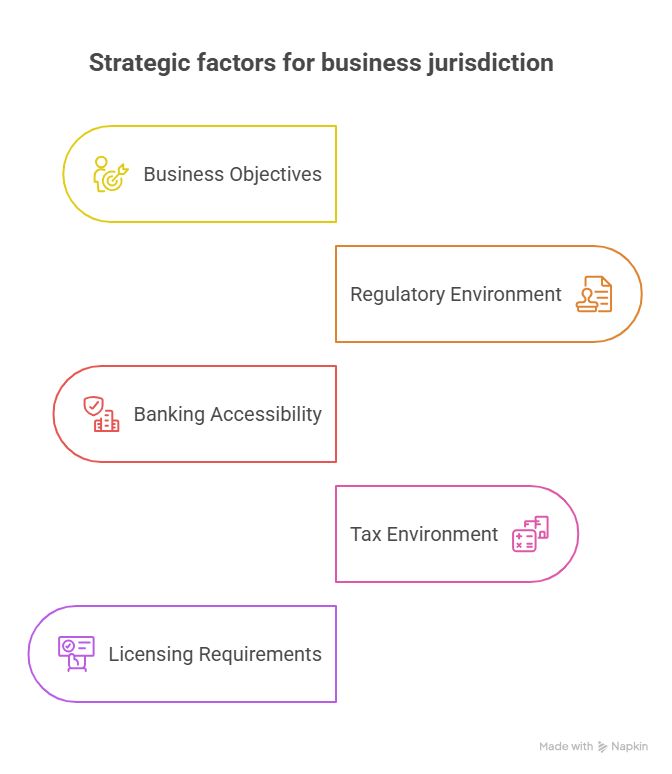
Before you file anything, a handful of strategic factors deserve real scrutiny; they’ll shape how your business actually performs once it’s operating.
Business Objectives :
The jurisdiction you choose should reflect what you’re actually trying to build. An e-commerce company will care about logistics networks and payment infrastructure; a tech startup is usually chasing investor-friendly regulation and a strong innovation ecosystem. These priorities point to very different countries.
Regulatory Environment:
Every jurisdiction has its own rulebook on foreign ownership, reporting obligations, and corporate governance.
Understanding that framework early before you’ve committed capital cuts down on compliance headaches later.
Banking Accessibility :
Opening a corporate account has become far more dependent on regulatory due diligence than it used to be.
It’s worth favoring jurisdictions with dependable banking systems and clear, transparent compliance standards, rather than ones that look attractive on paper but complicate account opening.
Tax Environment :
Tax planning still matters, but it should never be assessed in isolation. Weigh it against substance requirements, operational needs, and international reporting obligations — the full picture, not just the headline rate.
Licensing Requirements :
Certain sectors financial services, healthcare, education, logistics among them — require additional licensing before operations can even begin. That’s worth confirming early, not after incorporation.
Step-by-Step Guide to Registering a Company Abroad
Step 1: Choose the Appropriate Business Structure
Everything starts here. Selecting the right legal structure is the foundation international company formation is built on. Common options include Limited Liability Companies (LLCs), private limited companies, corporations, subsidiaries, and branch offices.
Which one fits depends on your ownership plans, liability exposure, tax position, fundraising needs, and how you intend to operate day to day.
Step 2: Select the Right Jurisdiction
Once the business model is settled, it’s time to evaluate countries against a clear set of criteria:
- Market accessibility
- Legal stability
- Banking infrastructure
- Compliance obligations
- Tax regulations
- Industry suitability
Choosing a jurisdiction purely for tax advantages tends to backfire operational friction has a way of showing up later, once it’s expensive to fix.
Step 3: Reserve Your Company Name
Most jurisdictions require name approval before incorporation can proceed. Make sure your proposed name clears local naming rules and doesn’t run into trademark conflicts, a detail that’s easy to overlook and costly to correct after the fact.
Step 4: Prepare Required Documentation
Documentation requirements shift from country to country, but they typically include:
- Passport copies
- Proof of address
- Shareholder information
- Director details
- Registered office address
- Incorporation documents
Get this right the first time. Accurate, complete documentation is one of the simplest ways to avoid approval delays.
Step 5: Submit the Registration Application
Applications go to the relevant government authority or corporate registry. Processing times vary considerably depending on the jurisdiction, how complete your documents are, and the pace of regulatory review.
Step 6: Obtain Business Licenses
Some industries need additional approvals before they can legally operate. Confirm early whether sector-specific licenses or permits apply in your chosen jurisdiction — this is not a step to leave until after the entity exists.
Step 7: Complete Tax Registration
Once incorporated, most businesses need to register for:
- Corporate income tax
- VAT or GST
- Tax Identification Number (TIN)
- Employer registrations (where applicable)
Handling tax obligations from day one keeps you on solid regulatory footing going forward — retrofitting compliance later is always harder.
Step 8: Open a Corporate Bank Account
This has become one of the more demanding parts of international expansion. Financial institutions now run thorough Know Your Customer (KYC) and Anti-Money Laundering (AML) checks before approving any business account.
Keeping ownership structures transparent and documentation complete meaningfully improves your odds of a smooth approval — banks reward businesses that make their job easy.
Step 9: Maintain Ongoing Compliance
Incorporation is the starting line, not the finish. What follows matters just as much:
- Annual filings
- Financial reporting
- Tax returns
- License renewals
- Corporate governance requirements
Staying compliant over the years is what actually determines whether the entity holds up long-term.
Common Challenges During International Company Formation
Expansion abroad opens real opportunities, but it’s worth going in with eyes open about where things tend to go wrong. The usual suspects:
- Selecting an unsuitable jurisdiction
- Incomplete incorporation documents
- Banking due diligence delays
- Misunderstanding local compliance obligations
- Industry-specific licensing requirements
Most of these are avoidable. Careful planning and experienced guidance handle them far better than reacting once a problem has already surfaced.
Vorx Pro Tip: Treat international company registration as the opening move in a longer game, not the whole strategy. Success hinges on banking readiness, regulatory compliance, and operational planning just as much as on the incorporation itself.
Conclusion
Registering a company abroad is not merely about creating a legal entity elsewhere; it is about laying the right foundation for expansion—one that is truly built to last.
The jurisdiction you choose will determine your regulatory obligations, banking access, credibility with clients and partners, and the opportunities available to you in the future.
A strategy based on long-term value—not shortcuts—ultimately helps maintain operational efficiency, compliance with regulations, and international competitiveness.
At Vorx Consultancy, we collaborate with entrepreneurs, investors, exporters, and rapidly growing businesses to build international companies through a strategic, compliance-first approach. From jurisdiction selection and documentation to corporate structuring and ongoing regulatory guidance, our focus remains on one thing: helping you expand globally with confidence.
Ready to expand your business internationally? Visit Vorxcon consultancy to explore tailored global business structuring and company formation solutions.