
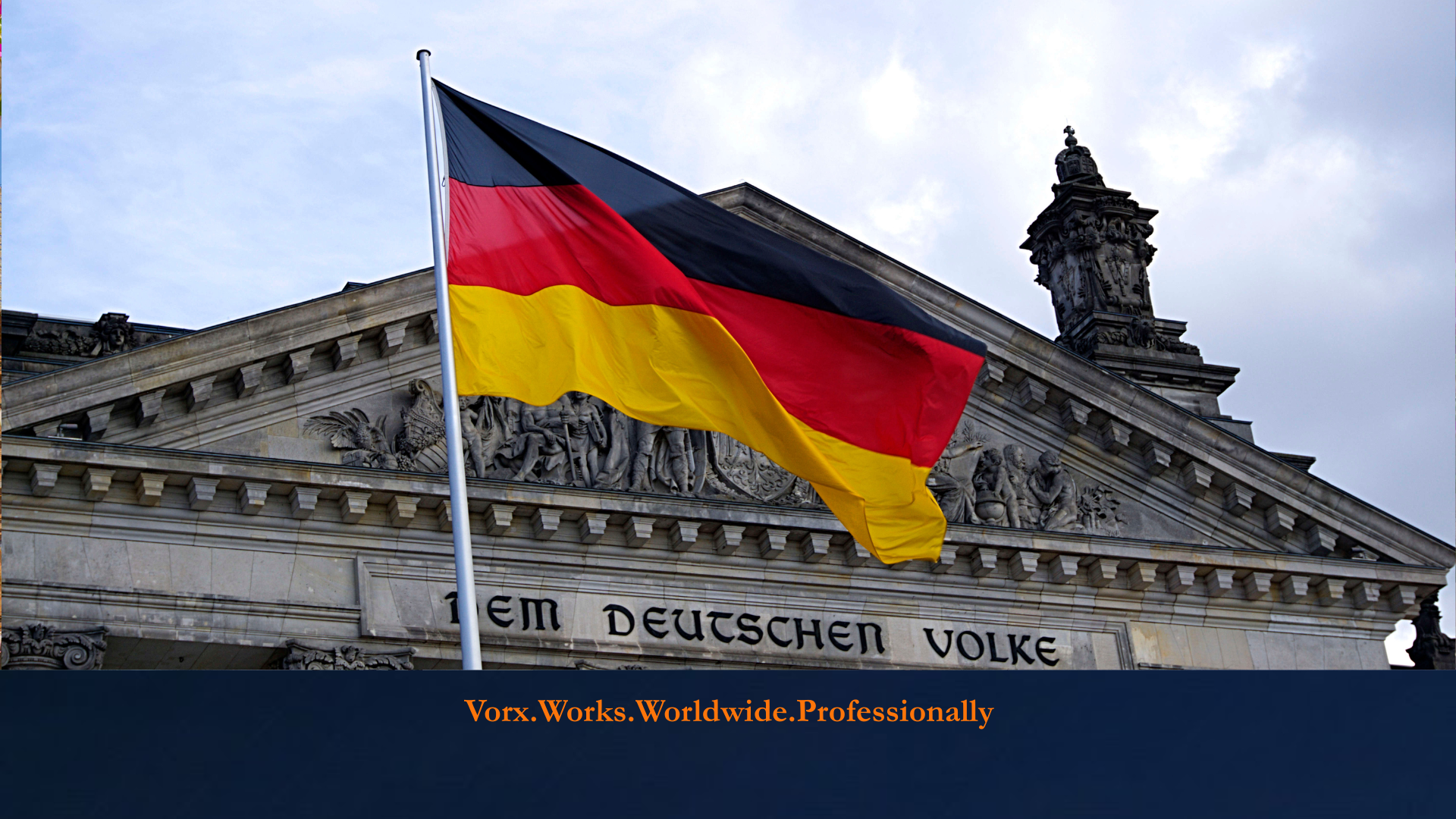
Germany is entering one of the most important economic transitions in its modern business history.
For decades, the country built its reputation on industrial precision, engineering dominance, manufacturing reliability, and regulatory discipline. But behind that economic strength, a structural imbalance has been growing quietly for years — Germany is running out of skilled workers.
Today, that shortage is no longer a future concern. It is an active economic pressure point affecting logistics, healthcare, IT, manufacturing, construction, renewable energy, and even mid-sized industrial businesses that form the backbone of the German economy.
This is precisely why company registration in Germany is rapidly becoming more relevant for international founders, consultants, staffing businesses, service providers, and operational firms seeking long-term European positioning.
Germany’s labor shortage is not simply creating demand for employees.
It is creating demand for foreign-led businesses capable of supporting economic continuity.
That distinction matters.
Because Germany is no longer only opening conversations around immigration. It is increasingly opening pathways for structured foreign business participation — particularly where international companies can contribute operational value, skilled workforce access, digital infrastructure, recruitment solutions, or specialized cross-border services.
For entrepreneurs thinking strategically, this is not merely a trend.
It is a structural shift.
And structural shifts create long-term market opportunities.
Why Germany’s Skilled Worker Crisis is Reshaping Business Entry
Germany’s workforce shortage is fundamentally tied to demographics.
A large percentage of the country’s experienced workforce is approaching retirement age while younger replacement numbers remain insufficient to sustain industrial and economic demand. At the same time, Germany is attempting to modernize rapidly across sectors including digital transformation, green energy, AI infrastructure, manufacturing automation, logistics optimization, and healthcare expansion.
The result is an economic paradox.
Germany has capital, infrastructure, banking strength, industrial capability, and market demand — but increasingly lacks enough people to maintain operational momentum.
This is why immigration reform discussions in Germany are now deeply connected to economic survival rather than political symbolism.
However, most founders misunderstand where the real opportunity exists.
The largest opportunity is not necessarily direct employment.
The larger opportunity lies in business enablement.
Foreign entrepreneurs who can solve operational gaps are becoming increasingly relevant within the German ecosystem. That includes recruitment firms, staffing consultancies, IT outsourcing businesses, AI support providers, engineering consultancies, healthcare coordination firms, payroll processors, logistics operators, and remote workforce management companies.
This shift is one of the primary reasons company formation in Germany is becoming strategically attractive for non-European founders.
Germany is not merely looking for investors.
It is looking for functional economic contributors.
Vorx Pro Tip: Germany rewards operational substance, not paper companies.
Your business model must clearly solve a commercial or workforce-related need.
Company Registration in Germany is No Longer Just About Market Access
Historically, many international entrepreneurs viewed Germany primarily as an EU market entry point.
That perspective is now incomplete.
Modern germany company incorporation is increasingly about strategic positioning within a high-trust jurisdiction at a time when global compliance standards are tightening across banking, taxation, immigration, and cross-border transactions.
Germany offers something that many emerging jurisdictions cannot easily replicate — institutional credibility.
A German entity immediately influences how banks, suppliers, procurement departments, investors, and B2B partners perceive a business.
This is especially relevant in industries where trust and compliance matter more than aggressive tax minimization.
For example, a German company structure can significantly improve perception in sectors such as:
- Industrial consulting
- Cross-border logistics
- Recruitment services
- SaaS infrastructure
- Engineering support
- Manufacturing coordination
- Healthcare operations
- Renewable energy consulting
However, founders must understand an important distinction.
Germany is not a “quick incorporation jurisdiction.”
It is a compliance-heavy ecosystem that rewards structure, documentation quality, operational transparency, and long-term planning.
Entrepreneurs who attempt shortcut setups often encounter banking barriers, tax registration delays, immigration inconsistencies, or regulatory scrutiny later.
That is where strategic sequencing becomes critical.
Understanding the Legal Reality Behind Company Formation in Germany
One of the most common misconceptions surrounding company formation in Germany for non residents is the assumption that incorporation itself is the difficult part.
In reality, the challenge is rarely the registration alone.
The challenge is proving legitimacy across multiple layers simultaneously.
German authorities and financial institutions generally evaluate foreign entrepreneurs through a broader lens that includes:
- Commercial viability
- Founder credibility
- Source of funds
- Immigration consistency
- Operational substance
- Long-term business intent
- Tax transparency
- Regulatory alignment
This means founders must stop thinking about incorporation as an isolated event.
In Germany, incorporation, immigration, banking, taxation, and operational planning are interconnected systems.
A mistake in one area often affects the others.
For example, founders frequently establish companies before understanding visa implications, director residency expectations, banking documentation standards, or local tax registration obligations.
That sequencing error can create severe operational friction later.
A legally incorporated company does not automatically mean a functional business ecosystem exists around it.
This distinction is critical.
Vorx Pro Tip: Immigration strategy should always be evaluated before final corporate structuring.
Banks and regulators increasingly examine whether the founder’s residency pathway aligns with the business activity.
The Most Common Structures Used for Company Registration in Germany
Germany offers several legal entity structures, but international founders most commonly consider either the GmbH or the UG structure.
The GmbH (Gesellschaft mit beschränkter Haftung) is generally viewed as the premium limited liability structure within Germany. It carries stronger commercial perception, better institutional credibility, and greater acceptance among larger suppliers, procurement networks, and financial institutions.
However, founders must understand that a GmbH involves stricter formalities, including notarized incorporation procedures, commercial registry filings, share capital considerations, accounting obligations, and structured compliance reporting.
The UG (Unternehmergesellschaft), often referred to as the “mini-GmbH,” allows lower startup capital requirements and is frequently used by early-stage founders or smaller operational businesses.
Yet market perception matters.
Many institutional partners still associate GmbH structures with stronger long-term commercial seriousness.
The correct structure depends on several variables, including:
- Founder residency status
- Business activity
- Immigration objectives
- Banking expectations
- Revenue model
- Scaling plans
- EU operational goals
- Investor positioning
This is why sophisticated structuring must always begin with strategic planning rather than template incorporation.
Why Company Formation in Germany for Non Residents Requires More Than Documentation
The global rise in searches for company formation in Germany for non residents reflects growing international interest in Germany’s economic stability and European market access.
But many online discussions oversimplify the reality.
Germany is accessible to foreign entrepreneurs in many cases, but accessibility does not equal informality.
Non-resident founders often underestimate the depth of compliance evaluation involved in areas such as:
- Address legitimacy
- Business substance
- Commercial intent
- Tax residency implications
- Banking due diligence
- UBO disclosures
- AML/KYC reviews
- Cross-border transaction patterns
This becomes especially important when founders attempt to operate Germany-based entities while remaining fully operational from overseas jurisdictions.
German authorities increasingly examine whether a business demonstrates genuine operational logic within Germany rather than existing purely as a paper structure.
This is particularly relevant under evolving European anti-abuse frameworks.
Artificial setups without commercial substance can create long-term regulatory and banking complications.
Founders entering Germany should therefore focus on sustainable operational alignment rather than fast incorporation alone.
Strategic Expansion Consultation
Planning company registration in Germany strategically rather than reactively can significantly reduce future compliance friction.
Strategy Call Booking
Vorx Consultancy
support@vorxcon.com
Germany’s Banking Environment Has Changed Dramatically
One of the least discussed realities in germany company incorporation is the increasing complexity of banking approvals.
A company may technically exist on paper while still struggling operationally because of incomplete banking functionality.
European banking institutions now apply far stricter compliance frameworks due to international AML regulations, tax transparency standards, and beneficial ownership scrutiny.
This means banks increasingly evaluate:
- Founder background
- Jurisdiction exposure
- Source of wealth
- Business activity clarity
- Expected transaction flows
- Client geography
- Commercial legitimacy
- Immigration consistency
Founders who enter Germany with vague operational narratives or inconsistent documentation often experience prolonged onboarding delays or account rejections.
This is particularly common when entrepreneurs attempt to establish companies without properly coordinating immigration positioning, tax planning, and operational evidence.
Germany’s financial ecosystem values predictability and transparency.
Businesses that appear rushed, overly aggressive, or poorly structured typically face higher scrutiny.
Why Germany is Becoming More Attractive for Cross-Border Service Businesses
A major shift occurring quietly inside Germany is the growing demand for external operational support systems.
The skilled worker shortage is not only creating labor demand.
It is creating infrastructure demand around labor shortages.
This is why foreign-owned service businesses are increasingly relevant.
Germany now presents growing opportunities for companies involved in:
- International recruitment
- Remote workforce management
- Payroll outsourcing
- HR technology
- AI automation support
- Process optimization
- Digital transformation consulting
- Healthcare staffing coordination
- Industrial subcontracting support
This trend is especially significant for founders from India, the UAE, Southeast Asia, and Africa who already operate international service-based businesses.
The opportunity is no longer limited to exporting products into Germany.
The opportunity increasingly lies in supporting Germany’s operational ecosystem itself.
That is a much more strategic market position.
Vorx Pro Tip: Founders should position themselves as ecosystem enablers, not merely foreign entrants.
Germany prioritizes operational continuity, compliance discipline, and economic contribution.
Immigration and Corporate Structuring Must Work Together
One of the most dangerous assumptions entrepreneurs make is treating immigration and company incorporation as separate projects.
They are not.
In Germany, immigration positioning often influences how corporate credibility is evaluated — particularly in regulated sectors, banking relationships, and tax reviews.
For example, inconsistencies between:
- Visa category
- Declared business activity
- Operational geography
- Director structure
- Revenue generation plans
can trigger unnecessary scrutiny.
This is why strategic planning matters far more than fast registration.
Founders should carefully evaluate:
- Whether relocation is necessary
- Whether local management structures are needed
- How tax residency may evolve
- Whether permanent establishment risks exist
- How EU operational expansion will be structured
Ignoring these questions early often creates expensive restructuring requirements later.
A company should never be incorporated before understanding its immigration and tax implications.
That sequencing principle is foundational.
Germany Structuring & Immigration Advisory
Cross-border expansion into Germany requires alignment between immigration planning, company structuring, banking readiness, and operational compliance.
Strategy Call Booking
Vorx Consultancy
support@vorxcon.com
Why 2026 May Become a Defining Window for Foreign Entrepreneurs
Germany is entering a period where economic necessity is accelerating institutional modernization.
This does not mean regulations are disappearing.
It means Germany is becoming more strategically open to founders who contribute measurable value.
That distinction is extremely important.
Many countries attract foreign businesses through low regulation.
Germany attracts serious businesses through institutional strength.
The entrepreneurs most likely to succeed in Germany over the coming years will not necessarily be those seeking the cheapest setup.
They will be those building:
- Real operational structures
- Defensible business models
- Transparent compliance systems
- Long-term European positioning
- Genuine economic contribution
This is where company registration in Germany becomes more than an administrative exercise.
It becomes a strategic infrastructure decision.
And for many founders, that decision may influence access to European markets, banking systems, procurement ecosystems, and long-term international credibility for years to come.
Final Strategic Perspective
Germany’s skilled worker crisis is reshaping far more than immigration policy.
It is reshaping how the country views international business participation.
The current environment is creating a rare intersection between labor demand, economic modernization, foreign entrepreneurship, and cross-border operational integration.
For serious founders, this creates opportunity — but only if approached with structure, patience, and strategic clarity.
The future of company formation in Germany will likely favor businesses that demonstrate:
- Commercial substance
- Regulatory discipline
- Long-term operational intent
- Transparent financial structuring
- Immigration alignment
- Genuine market contribution
Founders who approach Germany purely as a shortcut jurisdiction may struggle.
Founders who approach Germany as a strategic long-term ecosystem may position themselves exceptionally well within Europe’s evolving economic landscape.
Ultimately, germany company incorporation is no longer simply about opening a company.
It is about building credibility inside one of the world’s most respected commercial environments.
And in an era where compliance, transparency, and institutional trust increasingly determine business survival, that distinction matters more than ever.
Strategy Call Booking
Vorx Consultancy
support@vorxcon.com