

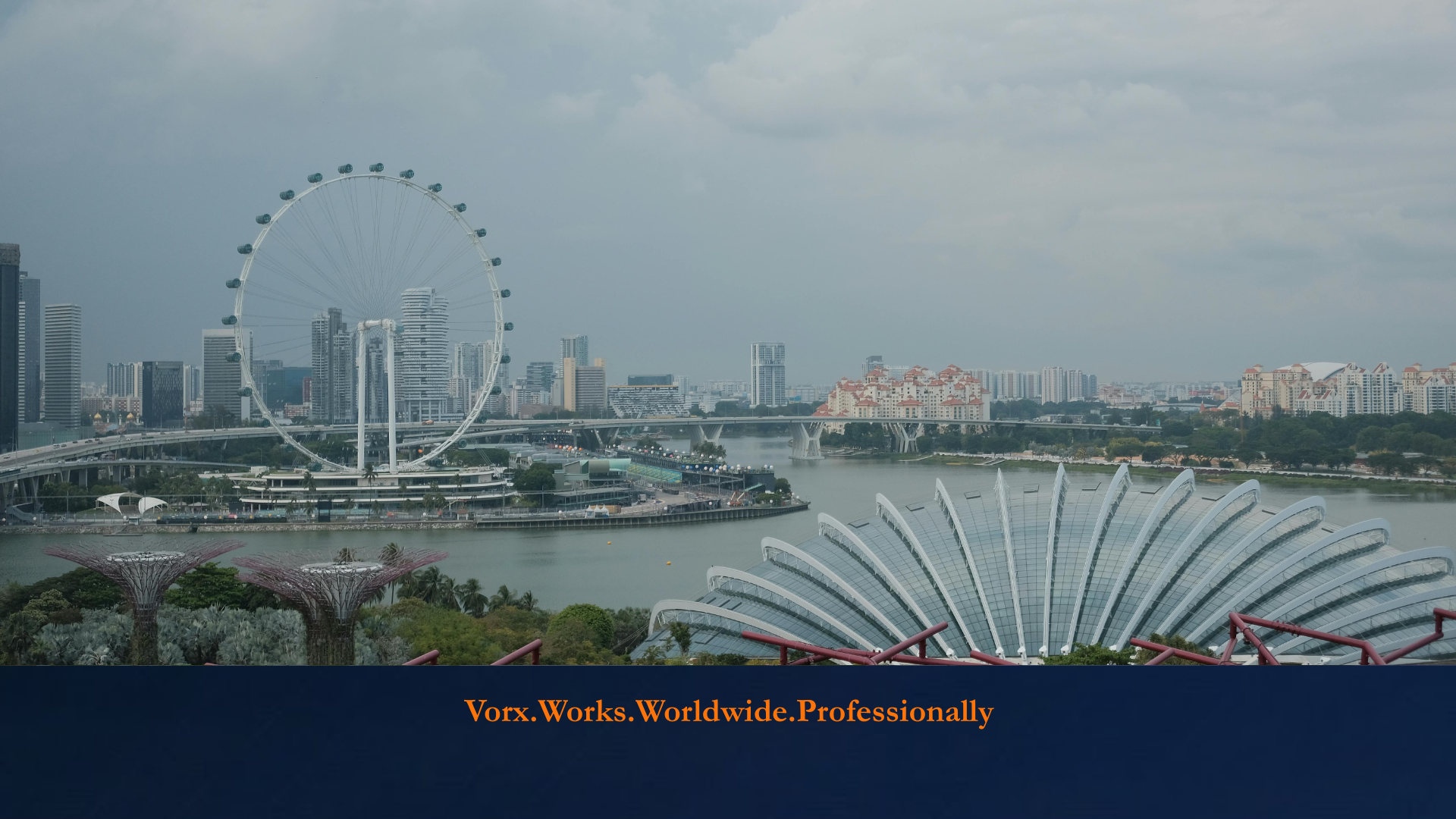
The Strategic Context: Asia-Pacific Is No Longer Optional
The global business landscape has shifted—quietly, but decisively. What was once considered expansion into Asia-Pacific is now a structural necessity for any business aiming for long-term relevance.
This region is no longer emerging. It is accelerating.
And at the center of this acceleration sits Singapore—not as a large consumer market, but as a precision-engineered gateway. A jurisdiction designed to connect capital, talent, and operations across Asia-Pacific with unmatched efficiency.
This is why company registration in Singapore has become a strategic priority for founders globally. But most discussions reduce it to speed and simplicity.
That’s a mistake.
Singapore is not just easy. It is structured, regulated, and expectation-driven—and that’s exactly why it works.
Singapore’s Real Advantage: Designed for Global Business
Singapore’s strength lies in alignment. Legal systems, financial infrastructure, & regulatory frameworks are built to work together—not against each other.
Its location gives access to ASEAN markets. But location alone doesn’t create leverage.
What creates leverage is regulatory predictability.
Singapore offers:
- Transparent corporate laws
- Strong contract enforcement
- Globally aligned compliance systems
This means businesses can operate with clarity—not guesswork.
However, this clarity comes with a critical condition:
Singapore rewards businesses that are structured correctly. It does not tolerate loosely built, opportunistic setups.
Vorx Pro Tip: Singapore is not a shortcut jurisdiction.
It is a precision jurisdiction—structure matters more than speed.
Company Registration in Singapore: Beyond the Surface
At a glance, the appeal of company registration in Singapore is obvious. The process is digital, efficient, and accessible to foreign founders.
Through company registration in Singapore for foreigners, entrepreneurs can fully own their companies without mandatory local shareholding. This alone sets Singapore apart from many jurisdictions that impose control limitations.
Additionally, the ecosystem surrounding incorporation is equally important:
- Strong banking credibility
- Global investor familiarity
- Seamless cross-border operations
This transforms Singapore entities into more than operational companies—they become strategic assets.
But here’s the distinction most founders miss:
Incorporation gives you a company. Structuring gives you an advantage.
Singapore Company Registration for Foreigners: Legal Reality Check
While singapore company registration for foreigners is accessible, it is not casual.
There are clear legal expectations:
- A resident director requirement must be fulfilled
- Corporate governance standards must be maintained
- Annual compliance filings are mandatory
These are not optional checkboxes. They are enforceable obligations.
More importantly:
Singapore operates under global transparency frameworks. Structures that lack economic substance or appear artificially constructed may face regulatory scrutiny.
This introduces a critical concept many overlook:
Substance over form.
A company must reflect real activity, real decision-making, and real intent.
Without this alignment, benefits can be limited—and risks increase.
Vorx Pro Tip: Don’t build a Singapore company just to “have one.”
Build it to reflect how your business actually operates.
Tax Efficiency: Precision, Not Avoidance
Singapore earns its reputation for tax efficiency—but people often misunderstand what that actually means.
The system rewards compliant, well-structured businesses; it doesn’t enable avoidance.
There are advantages:
- Favorable corporate tax structure
- No taxation on certain types of gains
- Strong treaty network
But these benefits are conditional.
Tax outcomes depend on how your Singapore entity interacts with your global structure and personal tax residency.
Ignoring this leads to one of the most common founder mistakes:
Double exposure—where income is taxed inefficiently across jurisdictions due to poor structuring.
The Biggest Mistake: Ignoring Immigration Strategy
One of the most overlooked aspects of company registration in Singapore for foreigners is immigration.
Owning a Singapore company does not automatically grant the right to live or work in Singapore.
If you intend to operate from within Singapore, appropriate immigration approvals are required.
This creates a critical sequencing principle:
Immigration strategy must align with business structuring from the beginning.
Failure to align these two can result in:
- Inability to legally manage operations locally
- Delays in scaling
- Structural inefficiencies
Vorx Pro Tip: A company gives you ownership—not operational rights.
Immigration defines how you can actually run the business.
Singapore as Part of a Global Structure
Singapore is rarely the entire structure. It is often the centerpiece within a broader global framework.
This may involve:
- Holding entities
- Cross-border operations
- Revenue routing strategies
- Intellectual property positioning
The effectiveness of singapore company registration for foreigners increases significantly when it is integrated intelligently.
However, complexity rises with it.
Multi-jurisdictional structures require alignment across tax laws, compliance systems, & reporting obligations. Misalignment can create exposure in more than one country simultaneously.
This is where most DIY approaches fail—not at incorporation, but at integration.
Strategic Structuring Begins Here
If you are considering company registration in Singapore as part of your expansion:
Book a Strategy Call
Explore structured solutions: www.vorxcon.com
Direct advisory: support@vorxcon.com
Execution Layer: Where Most Mistakes Happen
Once the company is incorporated, the real work begins.
Operational readiness includes:
- Banking setup
- Compliance systems
- Accounting frameworks
- Legal documentation
- Cross-border alignment
Each step must be sequenced correctly.
Mistakes at this stage are not immediate—but they surface later as compliance risks, banking issues, or tax inefficiencies.
Singapore’s regulatory clarity means these issues are easier to detect—and harder to justify.
Vorx Pro Tip: Early mistakes feel small.
Later, they become structural problems.
Who Should Consider Singapore in 2026
Singapore is highly effective—but not universal.
It is best suited for:
- Global digital businesses
- SaaS and tech founders
- Cross-border consultants
- Regional expansion strategies
It is less effective when the business is entirely local elsewhere and has no operational link to Singapore.
Structure must follow reality—not aspiration.
Final Perspective: Singapore Is a Strategy, Not a Shortcut
Singapore’s position as the #1 gateway to Asia-Pacific is not based on marketing. It is built on consistency, regulation, & global alignment.
But these strengths come with expectations.
Company registration in Singapore is not the finish line. It is the starting point of a structured system.
Founders who approach it strategically gain:
- Credibility
- Efficiency
- Regional leverage
Those who approach it casually face:
- Compliance friction
- Structural inefficiencies
- Long-term risk
Build with Clarity, Not Assumptions
Book a Strategy Call
Visit: www.vorxcon.com
Email: support@vorxcon.com