

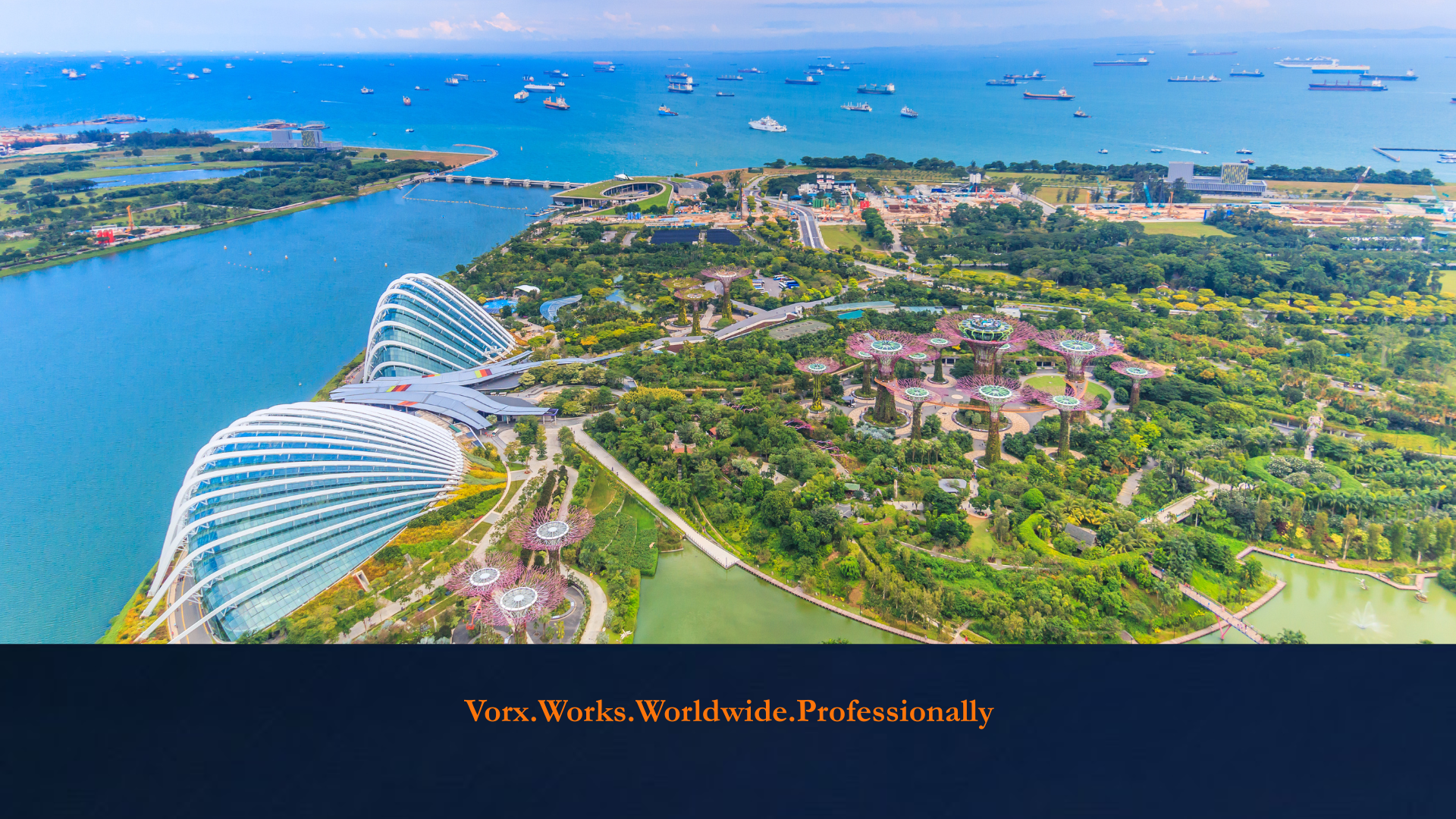
For global entrepreneurs, Singapore continues to occupy a unique position in international business structuring.
It is not simply a low-tax jurisdiction. It is not merely a place to open a company quickly. And contrary to what social media “tax strategy” videos often suggest, Singapore is not a shortcut around compliance obligations.
Singapore is respected because it combines regulatory credibility, banking confidence, international commercial recognition, and operational efficiency within one of the world’s most structured corporate ecosystems.
That distinction matters.
When investors review a Singapore entity, they understand the legal framework behind it. When global clients receive invoices from a Singapore company, there is an immediate perception of institutional reliability. Payment processors, banking partners, and international service providers typically view Singapore entities more favorably than companies formed in loosely regulated offshore jurisdictions.
But before founders move toward incorporation, one question consistently dominates the discussion:
How much does company registration in Singapore actually involve in 2026?
The answer is more nuanced than most incorporation agencies present online.
The official filing process itself is relatively straightforward. The real consideration comes from compliance infrastructure, immigration sequencing, banking readiness, nominee director obligations, tax structuring, and long-term operational maintenance.
For serious founders, understanding those distinctions is essential before making incorporation decisions.
This guide provides a practical, founder-focused breakdown of company registration in Singapore, particularly for foreign entrepreneurs evaluating long-term international business structuring.
Why Singapore Remains Strategically Attractive in 2026
Singapore’s continued attractiveness is not based on marketing. It is based on predictability.
In an increasingly unstable global regulatory environment, entrepreneurs value jurisdictions where rules are transparent, government administration is efficient, and compliance systems are clear.
Singapore delivers exactly that.
The jurisdiction continues to attract:
- SaaS founders
- International consultants
- AI startups
- E-commerce operators
- Family offices
- Digital agencies
- Cross-border service businesses
- Fintech ventures
- Investment holding structures
However, founders often misunderstand what they are truly gaining when they register your company in Singapore.
They are not only establishing a legal entity.
They are entering a globally trusted commercial framework.
That framework influences:
- Banking relationships
- Investor perception
- International contracts
- Cross-border taxation planning
- Operational scalability
- Payment infrastructure approval
- Long-term business mobility
This is why serious structuring decisions should never be reduced to “cheap incorporation packages.”
The lowest setup cost frequently produces the highest long-term compliance risk.
Company Registration in Singapore: Understanding the Full Structure
Most online incorporation advertisements oversimplify the process.
Many agencies promote fast incorporation timelines while avoiding discussion around the legal and operational obligations that follow after registration.
In reality, company registration in Singapore involves several interconnected layers:
- Legal incorporation
- Resident director compliance
- Corporate governance obligations
- Banking readiness
- Immigration alignment
- Tax positioning
- Annual statutory compliance
Understanding each of these areas separately is critical because incorporation alone does not automatically create a functional international business structure.
A company may legally exist while still facing operational limitations if immigration, banking, or compliance planning was poorly structured from the beginning.
That distinction becomes extremely important later.
Company Registration in Singapore for Foreigners: The Compliance Reality
Foreign founders cannot independently operate a Singapore company in the same way local residents can.
Under Singapore law, every company must maintain at least one locally resident director.
This requirement fundamentally changes the structuring process for international entrepreneurs.
If the founder is not relocating immediately under an Employment Pass or another qualifying immigration route, a nominee director arrangement is generally required to maintain legal compliance.
This is one of the most misunderstood areas in company registration in Singapore for foreigners.
Many founders incorrectly assume nominee arrangements are simple administrative formalities.
They are not.
A nominee structure directly affects:
- Corporate governance
- Banking relationships
- Compliance exposure
- Risk assessment
- Operational authority
- Long-term scalability
Poorly structured nominee arrangements can create serious operational vulnerability, particularly during banking reviews or regulatory assessments.
This is why experienced founders rarely choose providers solely based on low incorporation pricing.
Sophisticated structuring always prioritizes long-term operational stability over short-term cost reduction.
Vorx Pro Tip: Many founders rush into incorporation before understanding residency and compliance sequencing.
A stable immigration and operational structure should guide incorporation — never the reverse.
Corporate Secretary Requirements Are Legally Mandatory
Singapore law requires every company to appoint a corporate secretary within a defined statutory period after incorporation.
This is not a symbolic appointment.
The corporate secretary is responsible for helping maintain essential compliance obligations, including:
- Annual filings
- Statutory records
- Corporate resolutions
- Shareholder documentation
- Regulatory coordination
Singapore operates under a high-efficiency regulatory model.
The system is designed to support business growth, but it also expects corporate discipline.
Failure to maintain proper filings or governance standards can result in penalties, compliance scrutiny, and reputational concerns with financial institutions.
This is why ongoing maintenance matters just as much as the incorporation itself.
Registered Address Requirements and Economic Substance
Every Singapore company must maintain a registered local address.
For many international founders, this initially involves a virtual office or registered office arrangement rather than physical commercial space.
However, founders should understand an increasingly important international compliance concept:
A registered address alone does not establish meaningful economic substance.
This matters because global regulators, tax authorities, and financial institutions increasingly examine whether international companies have genuine operational legitimacy.
That review can affect:
- Banking approvals
- Tax residency interpretation
- Investor confidence
- International reporting obligations
- Immigration applications
Entrepreneurs attempting to use Singapore merely as a “paper jurisdiction” without operational coherence may face increasing scrutiny as international compliance standards continue evolving.
Banking Setup: The Most Underestimated Stage
The incorporation itself is often the easiest part of the process.
Banking approval is where many founders encounter unexpected complexity.
Singapore banks today conduct detailed due diligence reviews, especially for foreign-owned structures.
Institutions commonly evaluate:
- Business activity clarity
- Revenue sources
- Geographic exposure
- Founder background
- Operational legitimacy
- Compliance profile
- Transaction expectations
This is why many founders discover that incorporation approval does not automatically translate into immediate banking success.
Banks are increasingly cautious about structures that appear inconsistent, poorly documented, or commercially unclear.
For example, mismatches between immigration plans, business activities, operational geography, and projected transactions often trigger additional compliance reviews.
That is why strategic consistency across the entire structure matters.
Strategic Structuring Consultation
Book a private strategy consultation to evaluate the right Singapore structure for your international business goals.
Website: www.vorxcon.com
E-Mail: support@vorxcon.com
Annual Compliance Obligations Most Founders Ignore
One of the largest misconceptions around company registration in Singapore is the belief that incorporation is a one-time administrative event.
It is not.
Singapore companies operate within an ongoing compliance framework that requires continuous attention.
This commonly includes:
- Accounting maintenance
- Annual filing obligations
- Corporate governance upkeep
- Tax submissions
- Secretary renewals
- Record maintenance
- Regulatory updates
Founders who underestimate annual compliance frequently encounter operational friction later.
This becomes especially problematic when businesses begin scaling internationally, onboarding investors, applying for banking facilities, or pursuing immigration pathways.
A structurally weak company may survive during the early stages, but scaling usually exposes every compliance weakness that was ignored initially.
This is why sophisticated founders treat compliance as business infrastructure — not administrative inconvenience.
Register Your Company in Singapore: Immigration Should Be Considered First
One of the most common strategic mistakes international founders make is separating immigration planning from company structuring.
In practice, both are deeply interconnected.
For founders intending to relocate, actively manage operations inside Singapore, or establish regional presence, immigration considerations should be addressed before finalizing the corporate structure.
This is particularly relevant for Employment Pass planning.
Authorities increasingly assess whether:
- The business activity appears commercially legitimate
- Revenue projections are realistic
- Corporate structures are coherent
- Compensation structures make operational sense
- The company demonstrates long-term viability
- Business substance aligns with immigration narratives
Founders who incorporate first and think about immigration later often create avoidable restructuring complications.
This is precisely why experienced advisory-led structuring produces stronger long-term outcomes than generic incorporation-only services.
Vorx Pro Tip: Do not structure your company based on viral “tax optimization” content online.
Structure around banking acceptance, immigration alignment, and sustainable compliance.
Singapore’s Tax Reputation: What Entrepreneurs Must Understand Properly
Singapore’s tax environment is attractive, but frequently misunderstood.
Yes, Singapore offers an internationally competitive corporate framework.
Yes, there are favorable startup incentives and internationally respected treaty structures.
But entrepreneurs often misunderstand one critical reality:
Tax efficiency only works when the structure itself is compliant, operationally coherent, and properly maintained.
Singapore is not designed for aggressive concealment strategies.
Its reputation exists because the jurisdiction combines commercial flexibility with strong regulatory discipline.
That balance is exactly why international investors, financial institutions, and multinational businesses continue trusting Singapore entities globally.
Entrepreneurs evaluating Singapore structures should also carefully consider:
- Cross-border reporting obligations
- Personal residency implications
- Controlled foreign corporation considerations
- Source-of-income analysis
- Permanent establishment exposure
- International disclosure requirements
This is where experienced international advisory becomes significantly more important than simple incorporation filing.
Who Should Actually Consider Singapore Incorporation?
Singapore is exceptionally powerful for the right type of business.
But it is not universally ideal for every founder.
Generally, Singapore structures work particularly well for:
- International consultants
- SaaS businesses
- Technology startups
- Cross-border agencies
- Investment holding companies
- Regional expansion entities
- E-commerce businesses serving international markets
- Founders operating across multiple jurisdictions
However, if a business operates entirely within one domestic market, the long-term compliance obligations may outweigh the strategic benefits.
Good structuring is about alignment — not trend-following.
The right jurisdiction depends on:
- Revenue geography
- Operational scale
- Banking objectives
- Immigration planning
- Investor expectations
- Expansion strategy
- Compliance tolerance
That analysis should occur before incorporation begins.
Why Experienced Founders Prefer Advisory-Led Structuring
Technically, incorporation forms themselves are relatively straightforward.
Strategic structuring is where complexity begins.
The real value of experienced advisory firms lies in helping founders build operational coherence across:
- Immigration planning
- Banking readiness
- Tax positioning
- Governance structures
- Shareholding arrangements
- Expansion planning
- Compliance sustainability
Founders who optimize only for low-cost incorporation often discover hidden operational problems later.
Founders who prioritize structural clarity generally encounter fewer institutional barriers as the business scales internationally.
That difference becomes highly visible over time.
International Expansion Strategy Session
Schedule a confidential consultation to evaluate your Singapore expansion and business structuring strategy.
Website: www.vorxcon.com
E-Mail: support@vorxcon.com
Final Thoughts: Singapore Is About Credibility, Not Just Incorporation
The real question is not simply:
“How much does company registration in Singapore cost?”
The more important question is:
“What kind of international structure are you building for the next decade?”
Singapore remains one of the world’s strongest jurisdictions for entrepreneurs seeking international credibility, regulatory stability, banking reliability, and scalable operational infrastructure.
But successful incorporation is not created through low-cost filing alone.
It requires:
- Proper sequencing
- Immigration awareness
- Banking preparation
- Governance discipline
- Compliance consistency
- Long-term strategic thinking
Founders who approach Singapore as a serious operational jurisdiction generally benefit from its stability, efficiency, and global commercial reputation.
Founders who approach it merely as a shortcut often encounter avoidable structural friction later.
Ultimately, the difference is rarely the incorporation itself.
The difference is how intelligently the structure was designed from the beginning.
Explore More With Vorx Consultancy
For international business structuring, immigration-linked incorporation guidance, and long-term compliance planning:
Book Your Strategy Call
Website: www.vorxcon.com
E-Mail: support@vorxcon.com
