
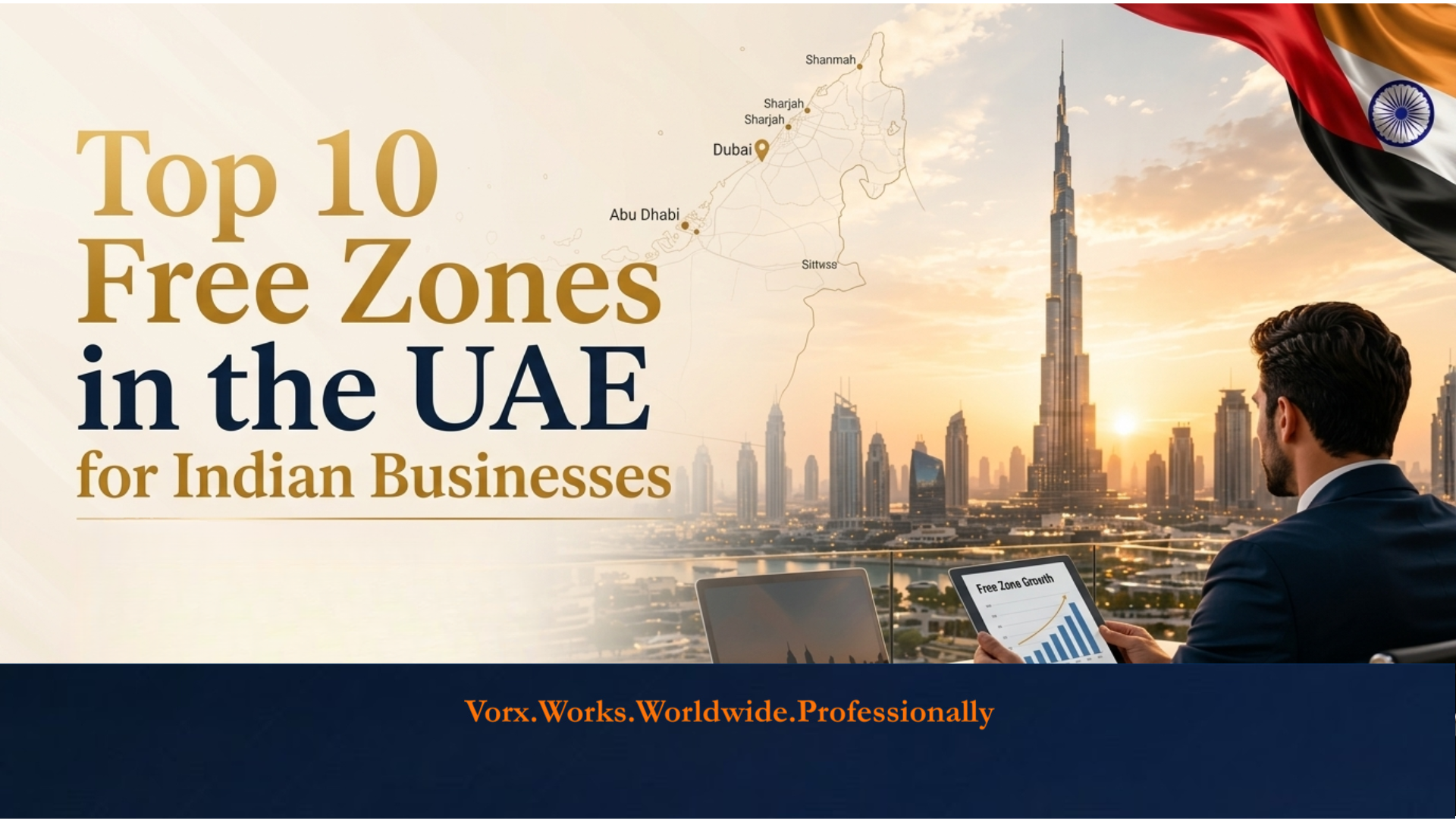
For Indian entrepreneurs, choosing the right jurisdiction can be just as important as choosing the right business structure. The Top 10 Free Zones in the UAE for Indian Businesses offer different advantages depending on whether you plan to build a trading company, consultancy, e-commerce brand, technology business or manufacturing operation. Instead of choosing a free zone only because it advertises low setup costs, Indian founders should consider business activity, workspace, logistics, visa requirements and long-term market access.
The UAE has numerous free zones across Dubai, Abu Dhabi and the northern emirates, with specialised options for technology, commodities, logistics, manufacturing, media and professional services.
1. DMCC – Dubai
DMCC is one of the strongest choices for Indian businesses involved in trading, commodities, e-commerce and technology. Its ecosystem covers sectors including gold, diamonds, energy, technology, gaming and e-commerce. The zone also provides access to offices, residency visas and fulfilment options.
Best for: Trading, e-commerce, commodities and professional businesses.
Consider: Businesses should select activities carefully because the permitted activity determines what the company can legally conduct.
2. Jebel Ali Free Zone (JAFZA) – Dubai
JAFZA stands out when the business depends on import, export, warehousing or manufacturing. Its location around Jebel Ali Port makes it particularly relevant for Indian companies moving products between India, the UAE and other international markets.
JAFZA permits 100% foreign ownership and offers different legal structures, including FZE and FZCO. An FZE can have one shareholder, while an FZCO can have multiple shareholders.
Best for: Trading, logistics, distribution and manufacturing.
Consider: Physical infrastructure requirements can make it more suitable for established operations than a small service startup.
3. IFZA – Dubai
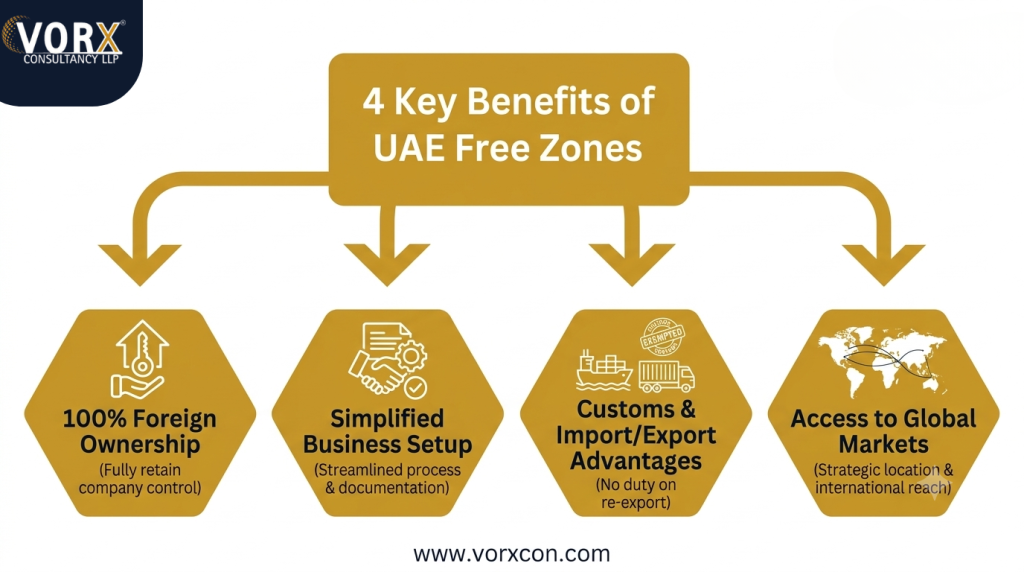
IFZA is worth considering for Indian entrepreneurs looking for a flexible professional or commercial setup. It permits 100% foreign ownership and supports a wide range of professional and commercial activities.
Best for: Consulting, IT, marketing, professional services and trading.
Consider: Match the licence activities closely with your actual revenue-generating services.
4. Meydan Free Zone – Dubai
Meydan is particularly useful for businesses that need multiple related activities under one setup. Its current activity list covers more than 2,500 activities, including professional services, ICT, trading, e-commerce and healthcare. It also allows up to three business activity groups under one licence.
Best for: Consultants, agencies, e-commerce businesses and multi-service startups.
Consider: Confirm whether any proposed activity requires third-party approval before applying.
5. Dubai South – Dubai
Dubai South has become an interesting option for logistics, e-commerce, technology and professional businesses. Its ecosystem includes a dedicated e-commerce zone and strong logistics infrastructure connected to major transport networks.
Best for: E-commerce, logistics, trading and supply-chain businesses.
Consider: Businesses with physical goods should evaluate warehousing and fulfilment requirements before selecting the licence.
Recommended Reading:
How Can I Register a Company in Dubai Step by Step? “For a closer look at the Dubai company formation process, explore the step-by-step registration requirements.”
6. Dubai Airport Freezone (DAFZ)
DAFZ is positioned next to Dubai International Airport and is suited to companies that value international connectivity and fast movement of goods. The free zone supports businesses across more than 20 sectors and offers company formation, warehousing and office solutions.
Best for: Trading, distribution, logistics and internationally connected businesses.
Consider: Its strategic location is most valuable when air connectivity is relevant to your business model.
7. KEZAD – Abu Dhabi
KEZAD is a stronger fit for Indian businesses looking beyond a conventional office-based company. Its free-zone model supports manufacturing, warehousing, wholesale distribution, re-export and industrial activities, with access to ports, airports and road networks.
Best for: Manufacturing, industrial businesses, distribution and logistics.
Consider: Evaluate land, warehouse and operational infrastructure requirements early.
8. RAKEZ – Ras Al Khaimah
RAKEZ offers a broad combination of commercial, professional, e-commerce, industrial and general trading licences. It also provides facilities ranging from flexi offices to warehouses and industrial land.
Best for: Startups, SMEs, manufacturing and trading companies.
Consider: It can be particularly relevant for businesses that need physical facilities rather than only a virtual or office-based setup.
Recommended Reading:
Starting a Business in the UAE before selecting a business read our guide Starting a Business in the UAE: A Step-by-Step Setup Guide for 2026 to understand the key steps involved in setting up a business in the UAE.”
9. Ajman Free Zone – Ajman
Ajman Free Zone can be considered by Indian entrepreneurs looking for a broad business setup environment outside Dubai. It is among the UAE free zones recognised on the UAE government’s official list and supports commercial and service-oriented business activities.
Best for: SMEs, trading and service businesses.
Consider: Compare the location against your customer base, logistics needs and expected UAE operations before choosing it over a Dubai-based zone.
10. Umm Al Quwain Free Trade Zone – UAQ
UAQ Free Trade Zone is an option for entrepreneurs looking for flexible business activities and a cost-conscious setup outside the major Dubai hubs. The government-operated zone currently lists more than 1,500 business options and offers 100% company ownership. It also provides e-commerce-focused setup options.
Best for: Startups, e-commerce, SMEs and businesses that do not need a central Dubai address.
Consider: Location matters if regular client meetings or Dubai-based operations are central to the business.
What Indian Businesses Should Check Before Choosing a Free Zone
The cheapest licence is not always the most suitable one. Before registering, Indian entrepreneurs should check five things:
- Permitted Business Activities
- Workspace Requirements
- Visa Eligibility
- Banking Requirements
- Access to the UAE Mainland Market
A free zone company can trade internationally, but direct mainland activity is regulated and may require the appropriate mainland arrangement or approval.
Tax should also be assessed carefully. UAE free-zone companies are not automatically exempt from Corporate Tax. Qualifying Free Zone Persons can benefit from 0% Corporate Tax on qualifying income, while taxable income that does not meet the qualifying-income conditions can be subject to 9%.
How VORX Helps Indian Entrepreneurs Choose the Right UAE Free Zone?
Choosing a UAE free zone should be a strategic business decision, not simply a search for the lowest-cost licence. VORX Consultancy helps Indian entrepreneurs assess their business activity, ownership structure, visa requirements, banking needs and long-term expansion plans before selecting the most suitable free zone.
With experience across UAE company formation, international business structuring and immigration solutions, VORX focuses on creating a setup that aligns with both the entrepreneur’s immediate requirements and future growth objectives.
The goal is simple: choose the right jurisdiction for the business not just the easiest one to register in.
Planning to set up your business in the UAE? Talk to VORX Consultancy for the right free-zone strategy.
Book a Strategy Call: (Calendly Link)
Visit: www.vorxcon.com
Email: support@vorxcon.com
Final Thought
For Indian entrepreneurs, choosing a UAE free zone is not simply about finding a place to register a company. The right jurisdiction should match the business activity, operational needs, target market and long-term growth plans.
Whether you are building a trading company, launching an e-commerce business, offering professional services or establishing a manufacturing operation, each free zone comes with a different ecosystem and infrastructure.
A well-planned setup can make entering the UAE smoother while creating a stronger foundation for regional and international expansion. The best free zone is ultimately the one that fits your business strategy today and supports where you want the business to go tomorrow.