


Your overseas company is registered, the documents are ready, and customers may already be waiting to pay. Then the bank asks another round of questions or declines the account without much explanation.
For founders, a rejection often comes down to something specific in the application: the bank cannot establish who controls the company, understand its transactions or verify how it will be funded. Here are ten reasons that deserve a closer look, with a practical solution.
1. The business description is too broad
A company may be registered for “consulting and trading,” but that does not tell the bank what it actually earns money from. Does it develop software for overseas clients, advise businesses, or buy and resell goods? Each activity has different customers, contracts and payment patterns. When the application uses broad registration language without explaining the real work, the reviewer cannot judge whether the proposed transactions fit the business.
Solution: Write a one-page description of what the company currently sells. State who buys it, how the work is delivered and how customers pay. If you offer several services, distinguish active revenue lines from activities you may pursue later. A recent contract, invoice or supplier agreement should support the description.
Planning to open a foreign bank account? Get expert guidance from Vorx Consultancy at www.vorxcon.com.
2. The bank cannot identify the individuals behind the company
If an overseas company is owned by an Indian LLP, naming the LLP as its shareholder is only the start. The bank may need to follow the ownership through the LLP to the individuals who ultimately own or control the business. The same question arises when several holding companies sit between the founder and the account applicant. If the documents stop halfway through that chain—or give different ownership percentages—the bank cannot complete its checks.
Solution: Create a chart from the overseas company through every parent entity to the individual owners. Show ownership percentages and identify who can operate the account. Check the chart against partner registers, share records and identity documents; unexplained differences can delay verification.
3. The opening deposit does not match the funding explanation
An application may say the Indian parent company will fund its foreign subsidiary. But if the proposed deposit comes from the founder’s personal account, the bank has a new question: is this a personal investment, a loan or money being sent on the parent’s behalf? The transfer may be legitimate, but the bank needs to understand both its original source and the reason it is entering this company’s account.
Solution: Decide and document the funding arrangement before the transfer. Identify the sender, recipient, amount and purpose. Provide the corporate approval, loan or investment documents where relevant, along with records showing the origin of the money. The explanation given to the overseas bank should match the transaction processed through the Indian bank.
Recommended Reading:
If the bank asks you to explain an opening deposit, our guide to source-of-funds checks for foreign banks can help you understand what the bank is trying to verify and which records may support your explanation.
4. There is no convincing reason to bank in that country
Incorporating in a country does not automatically explain why the company needs a bank account there. Suppose a founder opens a Singapore company, while all current customers, staff and suppliers remain in India. The bank may ask what the Singapore entity will do, who will pay it and what expenses it will meet. A registered address answers where the company is recorded; it does not answer how it operates.
Solution: Explain the account’s role in the business: for example, collecting payments from customers in that market or paying regional suppliers. Support planned activity with proposals, contracts or a credible operating plan. If the business has no practical connection to the country, assess whether another bank or payment provider better fits its actual operations.
Planning to open a foreign bank account? Get expert guidance from Vorx Consultancy at www.vorxcon.com.
5. The projected transactions are difficult to believe
A newly formed consultancy might forecast large monthly receipts from five countries while presenting only one small client agreement. Growth plans are welcome, but the bank must distinguish realistic expectations from unsupported figures. It also needs to know what a normal payment will look like so that the account’s expected activity has a clear basis.
Solution: Separate confirmed revenue from expected revenue. Give the bank a realistic range for monthly receipts, typical invoice size, currencies and customer locations. Explain how you reached the forecast and update it as the business grows.
6. The application tells different stories
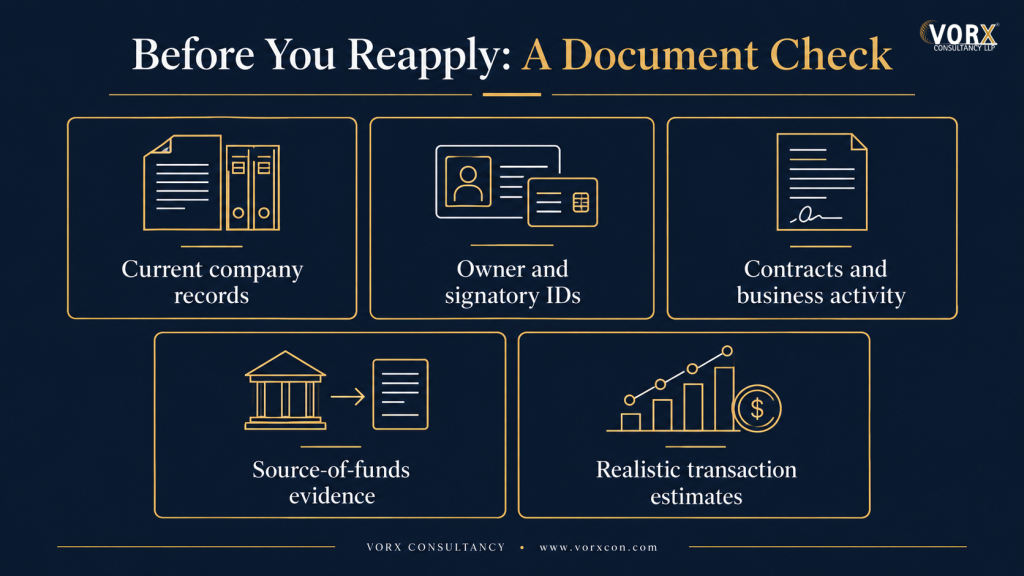
The bank form describes management consultancy. The website advertises payment processing. A contract refers to brokerage. Even if the founder intends to offer all three, the bank cannot tell which activity will generate payments into this account. Some activities may also raise licensing questions or sit outside the bank’s customer policy. The inconsistency becomes more serious when the application does not acknowledge it.
Solution: Audit every document the bank is likely to see. Describe the company’s present activity consistently and explain any genuinely separate business lines. If a regulated service is planned, establish whether the required licence or approval is in place before applying.
Recommended Reading:
Once the account is open, getting the payment details right matters too. Read our guide to IBANs and international transfers before sharing receiving instructions with overseas clients.
7. The company records are out of date
A director leaves, an address changes or a shareholder transfers their stake. The founder updates the bank form but submits an older company extract showing the previous details. From the bank’s perspective, it is unclear which record is current and whether the people applying are authorised to act for the company. What seems like a minor administrative delay can hold up the entire ownership and signatory review.
Solution: Obtain current registry extracts and supporting resolutions before applying. Include a brief note identifying what changed and when. Confirm that authorised signatories, owners and addresses agree across the application and current company records.
Planning to open a foreign bank account? Get expert guidance from Vorx Consultancy at www.vorxcon.com.
8. The new company has little evidence of its plans
A startup will not necessarily have months of bank statements or completed sales. Banks understand that. But an incorporation certificate alone gives them almost no view of who the company expects to deal with or why payments will begin arriving. If there is no customer pipeline, supplier arrangement, launch budget or clear first transaction, the reviewer has to rely almost entirely on the founder’s claims.
Solution: Submit evidence appropriate to the company’s stage: signed proposals, negotiations, supplier quotes, an operating budget or a launch timeline. Make clear which items are confirmed and which are prospective. Do not create invoices or contracts merely to make the company appear established.
9. The bank does not serve the type of business
A bank’s website may advertise corporate accounts without making every eligibility restriction obvious. It may require a resident director, prefer companies with trading history or limit onboarding for certain industries and payment destinations. In that situation, repeatedly supplying more documents may not change the outcome: the company falls outside the institution’s policy.
Solution: Before applying, confirm the bank’s requirements for Indian owners, remote onboarding, your industry and your expected payment countries. Also check that it provides the services you need—such as international collections, local payments or trade facilities. Choose the institution around the transactions, not only the country where you incorporated.
10. The plan for funding the account from India is incomplete
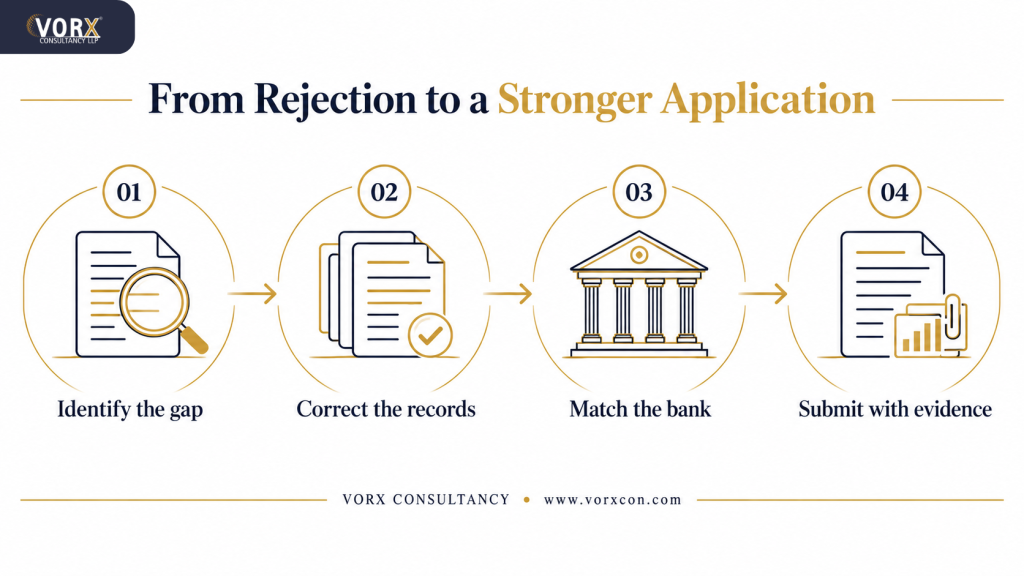
An overseas bank may be satisfied that the business is genuine yet still ask how its first funds will arrive. For an Indian founder, “I will send the money from India” is not a complete answer. A personal remittance, an Indian company’s investment in a foreign subsidiary and payment for services are different transactions, with different documentation and compliance considerations. The proposed transfer must make sense to the Indian bank as well as the overseas one.
Solution: Map the entire route before the first transfer: who owns the funds, who will remit them, why they are being sent and how they will be recorded. Review the applicable FEMA, tax and reporting position with qualified professionals and the authorised dealer bank. Keep copies of the documents supporting the remittance.
How Vorx Helps with your Business Bank Account?
Vorx supports Indian founders with international company formation, business structuring, bank account opening coordination, document preparation and cross-border compliance planning.
For a banking application, that means checking whether the ownership records identify the actual decision-makers, whether contracts support the activity described, and whether the funding route is properly documented. Vorx can help organise that evidence, assess suitable banking options and coordinate responses to follow-up questions. The bank makes the final decision on approval.
Facing a foreign bank account rejection? Speak with Vorx Consultancy
Book a Strategy Call: (Calendly Link)
Visit: www.vorxcon.com
Email: support@vorxcon.com
Final Thought
A rejection does not always mean there is something wrong with the business. It may mean a legitimate transaction was poorly explained, a document no longer reflects the company’s current position, or the chosen bank does not accept that customer profile.
Before submitting another application, look at the file through a reviewer’s eyes. Could someone who has never met you identify the owners, understand what customers pay for and trace the first deposit? Could they see why this account is needed in this country? If those answers exist only in a conversation with the founder, put them—and the evidence behind them—into the application.