

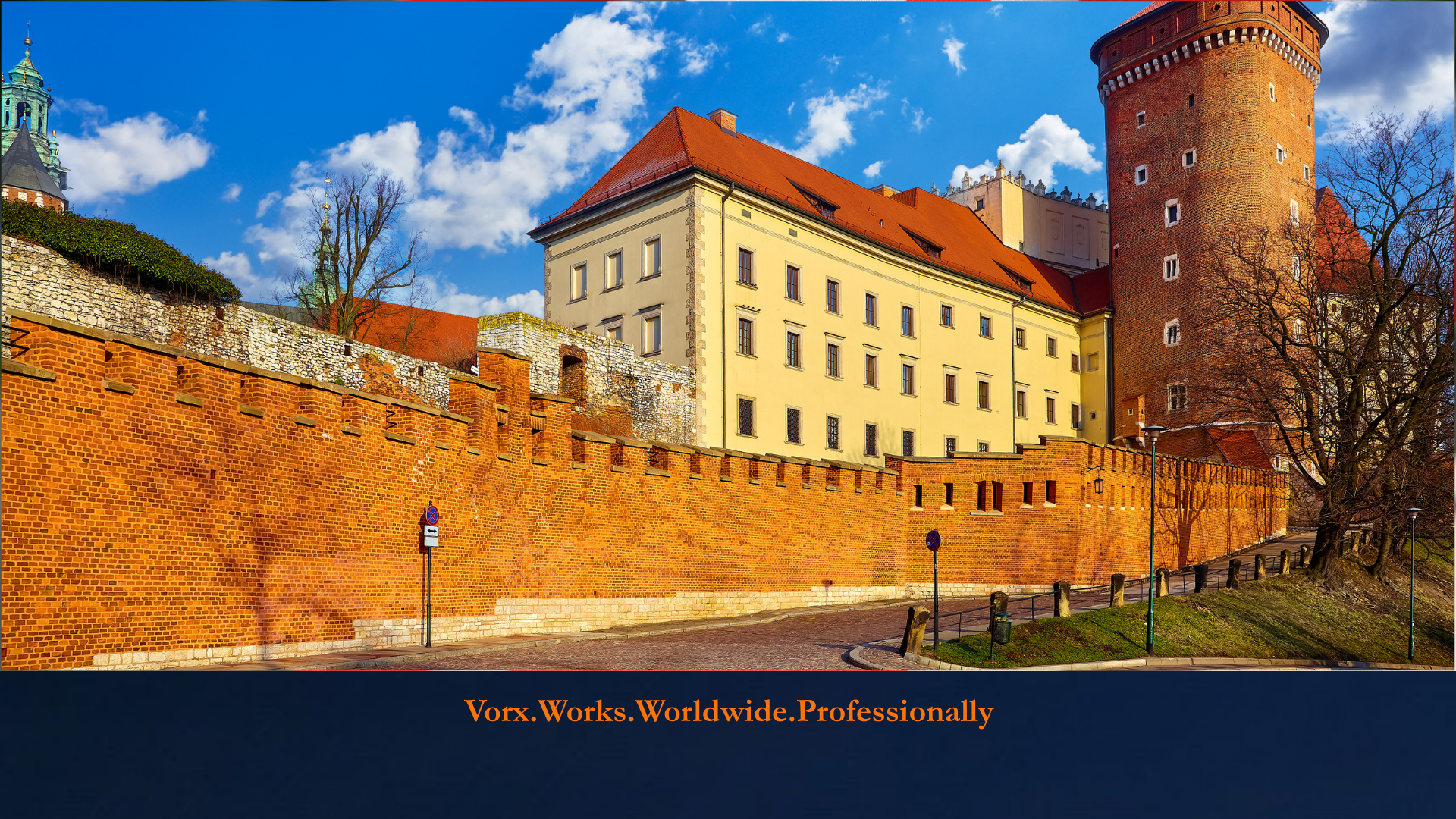
Introduction: Poland Is No Longer Emerging—It Is Structurally Established
Poland’s position in the European business landscape has fundamentally shifted over the past decade. What was once viewed as a cost-efficient alternative to Western Europe has now matured into a strategically integrated, EU-compliant, and operationally resilient business jurisdiction.
For global founders evaluating company registration in Poland, the conversation is no longer about affordability or experimentation. It is about access, scalability, and regulatory alignment with the European Union market structure.
Unlike many jurisdictions that compete on incentives or short-term advantages, Poland has built its relevance on infrastructure, legal predictability, and workforce depth. This makes it particularly relevant for founders planning long-term European operations rather than short-cycle incorporations.
At Vorx Consultancy, we increasingly observe that entrepreneurs are not simply incorporating entities—they are redesigning their entire global footprint. Poland has become one of the most strategic entry points into that redesign.
Poland’s Strategic Position: Why Geography Alone Does Not Explain Its Rise
While Poland’s central European location contributes to its accessibility, the real transformation lies in its institutional alignment with the European Union’s economic and legal systems.
This alignment allows businesses incorporated in Poland to operate within a unified regulatory environment, significantly reducing friction when expanding across European markets.
For founders exploring company registration in Poland for foreigners, this becomes particularly relevant. The jurisdiction does not operate in isolation; it functions as a gateway jurisdiction into the EU single market, enabling cross-border scalability without repeated structural restructuring.
However, a critical strategic reality must be understood: Poland is not a low-compliance jurisdiction. It is a high-structure jurisdiction with predictable enforcement. This distinction is essential because many founders misinterpret efficiency as informality—leading to avoidable compliance friction later.
Vorx Pro Tip: Do not treat Poland as a “quick incorporation jurisdiction.”
Treat it as a structured EU entry system that requires long-term operational discipline.
Understanding Company Structure: The Core of Polish Incorporation Logic
The most commonly used structure for foreign entrepreneurs is the Spółka z ograniczoną odpowiedzialnością (Sp. z o.o.), which is broadly equivalent to a private limited liability company.
This structure is central to company registration in Poland from India and other non-EU jurisdictions because it supports full foreign ownership while maintaining EU legal recognition.
What makes this structure strategically important is not only its flexibility, but its compatibility with banking systems, contractual enforcement, and cross-border taxation frameworks within the EU.
However, a critical structural mistake many founders make is treating incorporation as a standalone milestone rather than a governance framework. In Poland, governance structure directly influences compliance obligations, reporting cycles, and tax classification.
This means that early-stage structuring decisions have long-term consequences on operational flexibility.
Vorx Pro Tip: Structure is not administrative—it is strategic architecture.
Incorrect structuring in Poland creates long-term compliance rigidity that is difficult to unwind.
The Incorporation Pathway: A Structured, Not Instant, Process
The process of company registration in Poland follows a defined legal and administrative sequence designed for traceability and compliance integrity. It is not designed for speed at the expense of transparency.
At a high level, the incorporation pathway includes:
- Defining business activity classification under official codes
- Establishing shareholder structure and governance model
- Registering through the national court system
- Obtaining tax and statistical identification
- Activating operational and banking infrastructure
Each stage is interdependent. A delay or inconsistency in one stage can impact downstream approval or operational readiness.
A key strategic insight often overlooked by foreign founders is that banking activation and compliance verification frequently become more critical than incorporation itself. Polish financial institutions operate under strict EU compliance frameworks, which require clarity in business activity, ownership structure, and transaction intent.
Why Foreign Founders Are Increasingly Choosing Poland
The rise of company registration in Poland for foreigners is not driven by trend cycles—it is driven by structural global shifts in business location strategy.
Founders are increasingly prioritizing jurisdictions that provide:
- Access to EU-wide operational frameworks
- Predictable legal enforcement systems
- Strong professional and technical workforce availability
- Digital-first administrative infrastructure
Poland delivers on these requirements without positioning itself as a low-regulation or offshore environment. Instead, it offers institutional stability combined with operational accessibility.
However, one of the most underestimated risks is compliance misalignment during early operational setup, particularly around taxation categorization and reporting obligations. This is where many foreign businesses face unnecessary administrative friction.
Vorx Pro Tip: Compliance in Poland is not reactive—it is continuous.
Founders must design reporting systems at incorporation stage, not after operations begin.
Taxation and Compliance Environment: Predictability with Accountability
Poland’s taxation framework is structured around transparency and accountability. For incorporated entities, taxation is not only a financial obligation but also a reporting discipline that integrates with broader EU compliance standards.
This system is particularly important for foreign founders because it eliminates ambiguity—but requires consistency.
A major strategic misunderstanding occurs when founders assume that EU integration automatically simplifies compliance. In reality, it introduces standardized compliance expectations across jurisdictions, meaning businesses must maintain documentation discipline, reporting accuracy, and structured financial records.
Failure to maintain compliance consistency is one of the primary reasons foreign entities face operational disruption—not incorporation failure.
Operational Reality: Banking, Verification, and Business Activation
While incorporation establishes legal existence, operational functionality in Poland depends heavily on verification systems, especially in banking.
Banks typically assess ownership structure, business model clarity, and expected transaction flow before activating full operational accounts.
For founders pursuing company registration in Poland from India, this stage requires careful preparation because cross-border ownership structures are subject to enhanced scrutiny under EU financial compliance frameworks.
The most common delay in Polish market entry is not legal registration—it is operational onboarding.
Vorx Pro Tip: Prepare banking documentation and business narrative before incorporation begins.
Post-incorporation preparation creates unnecessary operational delays.
Strategic Mistakes Foreign Entrepreneurs Must Avoid
Despite Poland’s structured system, several recurring errors impact foreign founders:
- Treating incorporation as a standalone objective instead of a system entry point
- Misaligning business classification with actual operational activity
- Underestimating ongoing compliance obligations
- Ignoring cross-border tax reporting implications
- Structuring ownership without long-term scalability considerations
Each of these mistakes does not typically block incorporation—but it can significantly impact operational efficiency and scalability.
The key insight is simple: Poland rewards precision, not improvisation.
Vorx Consultancy Perspective: Structuring Beyond Incorporation
At Vorx Consultancy, we approach company registration in Poland as a strategic architecture decision rather than a procedural task.
Incorporation is not the end state—it is the beginning of a multi-jurisdictional business framework that must align with long-term operational expansion goals.
For global founders, Poland is most effective when it is positioned as:
- A European operational base
- A cross-border service hub
- A structured compliance environment for scalable growth
The value lies not in registration itself, but in how the structure integrates into broader international expansion strategy.
Final Section: Poland as a Strategic Decision, Not a Procedural Choice
Poland’s emergence as a Central European business hub is not a temporary shift—it is a structural evolution in how global businesses choose jurisdictions.
For founders evaluating company registration in Poland, the key insight is not whether incorporation is possible, but whether it aligns with long-term operational design.
This is not a jurisdiction for shortcut thinking. It is a jurisdiction for structured execution, regulatory clarity, and scalable European integration.
In an increasingly regulated global economy, Poland represents a rare combination of predictability and opportunity—but only for founders who approach it with strategic discipline.
If you are planning strategic expansion into Europe or evaluating company registration in Poland for foreigners, structured advisory is critical before execution.
Book a Strategy Call
Website: www.vorxcon.com
Email: support@vorxcon.com
