
Having a company operating well requires more than creating a business and handling their money. Companies also need to follow legal, official and tax rules. This is where tax compliance and corporate compliance play a role.
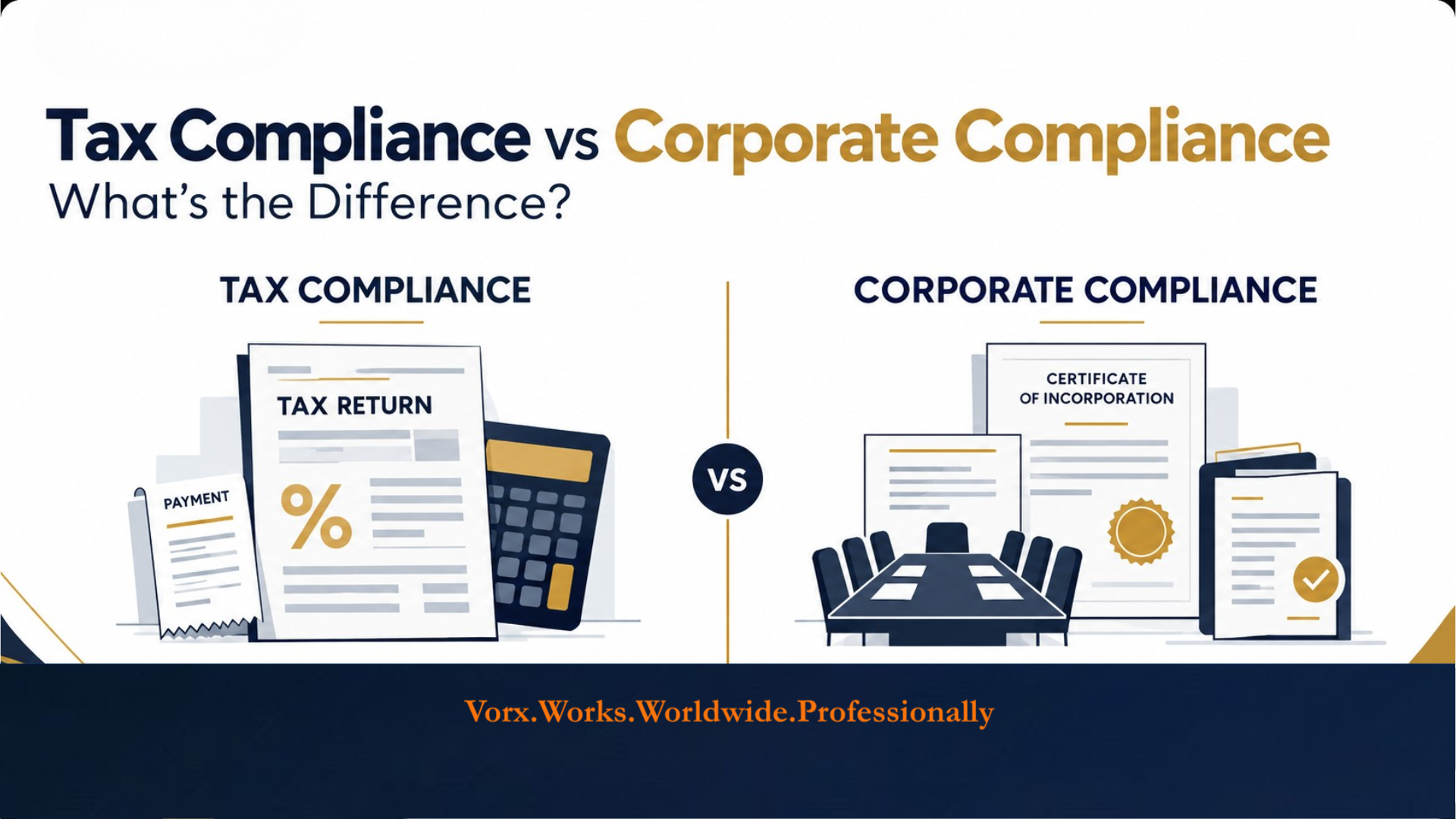
Even though they are similar they are not the same. Tax compliance is about making sure that a company meets their tax duties with the organizations while corporate compliance is about making sure that a business keeps the legal setup, documents and official rules in place. Knowing the difference can help business owners avoid thinking that one part can take the place of the other.
What Is Tax Compliance?
Tax compliance refers to the process of meeting all tax-related obligations applicable to a business. These obligations depend on the company’s activities, location, structure and the taxes that apply to it. Tax compliance may include:
- Registering for applicable taxes
- Preparing and filing tax returns
- Paying taxes by the relevant deadlines
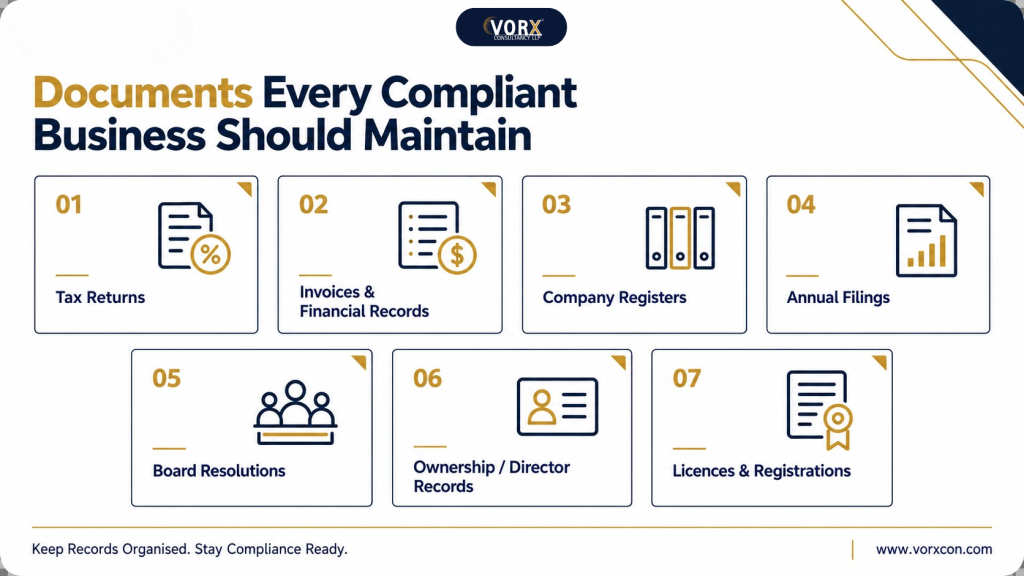
- Maintaining financial and tax records
- Meeting withholding or reporting obligations where applicable
- Responding to requests or enquiries from tax authorities
It is not limited to filing a tax return once a year. Businesses need to keep their records and transactions organised throughout the year so that their tax reporting is accurate and properly supported.
Planning your next business move? Connect with Vorx Consultancy
What Is Corporate Compliance?
Corporate compliance focuses on the legal and statutory responsibilities associated with maintaining a company. It is concerned with whether the company continues to meet the requirements imposed on it under applicable company law. Depending on the jurisdiction and company structure, this can involve:
- Annual or periodic statutory filings
- Maintaining company registers and corporate records
- Recording changes in directors or shareholders
- Preparing board or shareholder resolutions
- Maintaining the registered office and company information
- Reporting certain changes to the relevant corporate authority
Corporate compliance therefore continues after incorporation. A company that was correctly established can still become non-compliant if required filings, records or corporate updates are not maintained.
Planning your next business move? Connect with Vorx Consultancy
Recommended Reading:
For businesses operating across borders, proper tax planning can help manage different tax obligations and reporting requirements. Our International Tax Planning Guide explains the key considerations businesses should understand.
Tax Compliance vs Corporate Compliance: What’s the Difference?
Area | Tax Compliance | Corporate Compliance |
Main focus | Meeting tax obligations | Maintaining the company’s legal and statutory standing |
Key authority | Tax authority | Corporate/company registrar or relevant regulator |
Common requirements | Tax returns, payments, tax records | Annual filings, company records, statutory updates |
Records | Financial and tax documentation | Registers, resolutions and corporate documents |
Trigger events | Taxable transactions, filing periods | Changes in directors, shareholders or company details |
Main objective | Accurate and timely tax reporting | Proper maintenance of the company |
How Are Tax and Corporate Compliance Connected?
Tax and corporate compliance may involve different requirements, but they often overlap when a business makes a change. A new director, change in ownership, expansion into another country, or change in business activity can create both corporate and tax-related responsibilities. The practical connection can be understood like this:
Business Change → Corporate Update → Tax Impact Check → Required Filings & Records → Ongoing Monitoring
For example, if a company adds a new shareholder, its corporate records may need to be updated and the required statutory filing may need to be completed. At the same time, the business should check whether the ownership change creates any tax reporting, beneficial ownership or documentation requirements. Keeping both sides aligned ensures that the company’s legal records and tax information remain consistent.
Recommended Reading:
If you are planning to operate a business in Hong Kong, understanding the local tax framework is important. Our Hong Kong Tax System Explained guide covers the key taxes, territorial taxation and important considerations for businesses.
What Are Some Common Examples?
Consider a few situations that show how the two areas differ:
New company formation: Corporate compliance includes incorporation and establishing the required company records. Tax compliance involves understanding applicable tax registrations and obligations.
Change in director or shareholder: Corporate records may need to be updated and the relevant filing made. The transaction should also be reviewed for any applicable tax implications.
Annual reporting: A company may have a statutory corporate filing due while also having a separate tax return or tax payment deadline.
These examples show that meeting one obligation does not automatically satisfy the other.
Planning your next business move? Connect with Vorx Consultancy
How Should Businesses Manage Both?
The easiest way to manage both is to connect compliance with regular business activities instead of checking it only when a filing deadline is approaching.
Business Activity | What to Check |
New company setup | Corporate registration + tax registrations |
New director/shareholder | Corporate records + possible tax implications |
New country or market | Local filings + tax obligations |
Change in business activity | Licences + tax treatment |
Year-end compliance | Corporate filings + tax returns/payments |
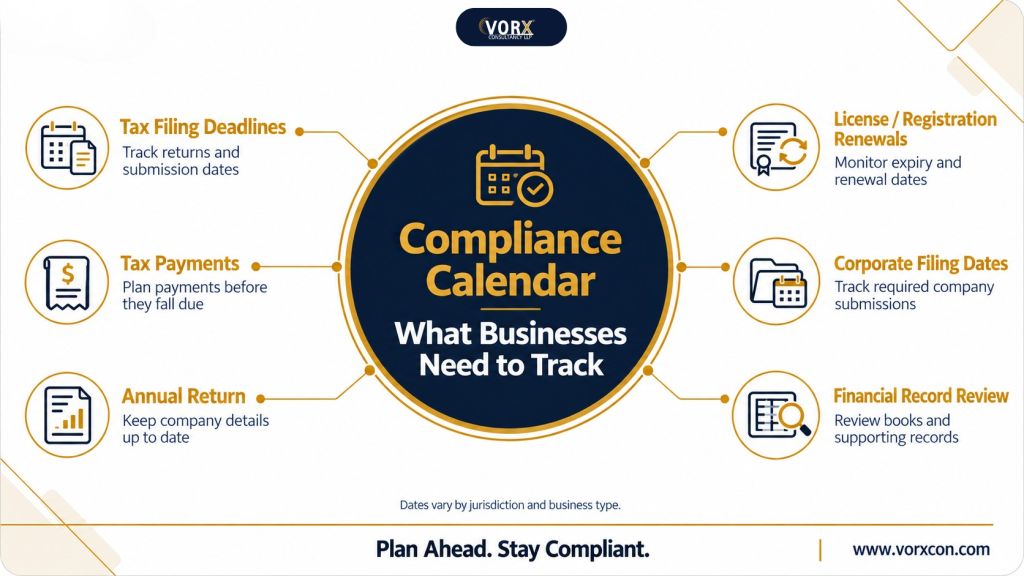
Businesses should also maintain a compliance calendar and keep corporate, financial and tax documents updated. This makes it easier to identify what needs to be filed, when it is due and whether a business change requires action on both sides.
Planning your next business move? Connect with Vorx Consultancy
How Vorx Consultancy Can Help with Your Compliances?
Managing tax and corporate compliance becomes more complicated for a company that is operating across several jurisdictions. Vorx Consultancy offers end to end support to businesses with regards to their ongoing compliance requirements, including tax compliance, annual filings, corporate compliance, regulatory documentation and business related reporting.
We can also help with company incorporation and structuring, tax and compliance coordination, corporate bank account support, regulatory requirements and ongoing statutory obligations. For businesses looking to expand internationally, our team can help coordinate these requirements so that corporate records, tax obligations and necessary filings are organised and up to date.
Need help managing your tax and corporate compliance? Talk to Vorx Consultancy today.
Book a Strategy Call: (Calendly Link)
Visit: www.vorxcon.com
Email: support@vorxcon.com
Final Thought
A business needs to ensure both tax compliance and corporate compliance. Although they differ in scope and purpose, both aspects of a business need to be taken seriously for them to run smoothly and profitably.
For businesses, especially multinational organizations, it can be easier to keep track of and make sure that both corporate and tax compliance are handled properly, making them easier to manage over time.
