

Thailand presents a good opportunity for entrepreneurs who wish to enter the Southeast Asian market, deal with local suppliers or even grow an existing business; there are, though, a number of further points to take into account before starting the process of incorporation.
It is important before deciding to invest to carefully consider your business model, your target customers, the way you will own the business and your budget. On the basis of these four points you will be able to decide if it is a feasible option and how you would like to proceed with setting up your business in Thailand.
Choose the Right Country for Your Global Business Expansion. Get expert guidance from Vorx Consultancy on company formation, tax, and compliance.
Contact Us: https://www.vorxcon.com/contact-us/
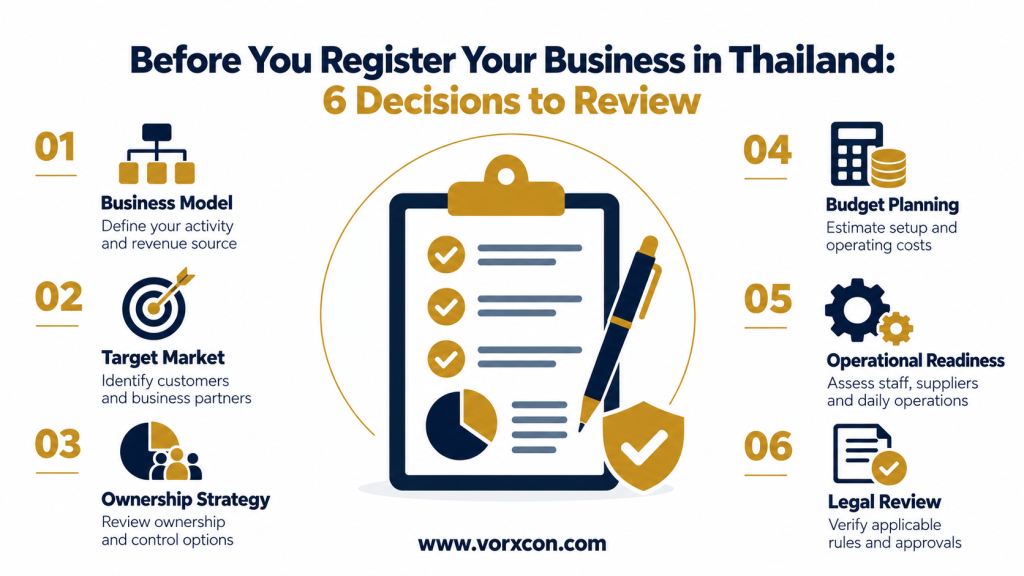
1. Define What Your Business Will Actually Do in Thailand
Start by identifying exactly what your business will do in Thailand. Will you sell products locally, provide services to overseas clients, source goods from Thai suppliers, or use Thailand as a base for regional operations?
Your business activity can affect ownership rules, licensing, staffing, and operating costs. For example, a trading company may need to consider import procedures, while a service business may focus more on finding clients and hiring skilled professionals. Before moving forward, clarify:
- The products or services you will offer
- Your expected source of revenue
- The resources needed to deliver your services
- The role Thailand will play in your wider business plans
2. Decide Who Your Customers and Business Partners Will Be
Prior to entering the market, it is necessary to do some research and figure out who is going to buy from you and how they will learn about your offerings. Your customers can include Thai consumers, local companies, international clients or businesses in the regional market.
In addition to determining your target audience, it is also necessary to think about your partnerships. Depending on your business model, your partners can include suppliers, distributors, logistics companies and local consultants.
In both cases, defining their responsibilities and expectations will save you a lot of time and money later on. A competent Thailand market entry strategy will also set out your potential customer base and why they would choose you over the competitors.
Recommended Reading:
If you are planning to enter the Thai market, explore the key requirements, business considerations, and important factors to understand before moving forward with setting up a business in Thailand.
3. Evaluate the Right Ownership and Control Strategy
Foreign entrepreneurs should decide how they want to own and manage their business before committing funds. Consider who will invest, who will make important decisions, and how responsibilities and profits will be shared.
Thailand’s foreign ownership rules vary by business activity. Some activities permit foreign ownership, while others may be restricted or require specific permissions. A local shareholder does not automatically make a restricted business legally compliant. Before finalising your plan, consider:
- How much control you need over daily operations
- Whether any genuine business partners will contribute capital or expertise
- How shareholder disagreements or exits will be handled
- Whether your proposed activity requires additional approval
Review the applicable rules with a qualified adviser before signing agreements or transferring funds.
4. Calculate Your Realistic Business Budget
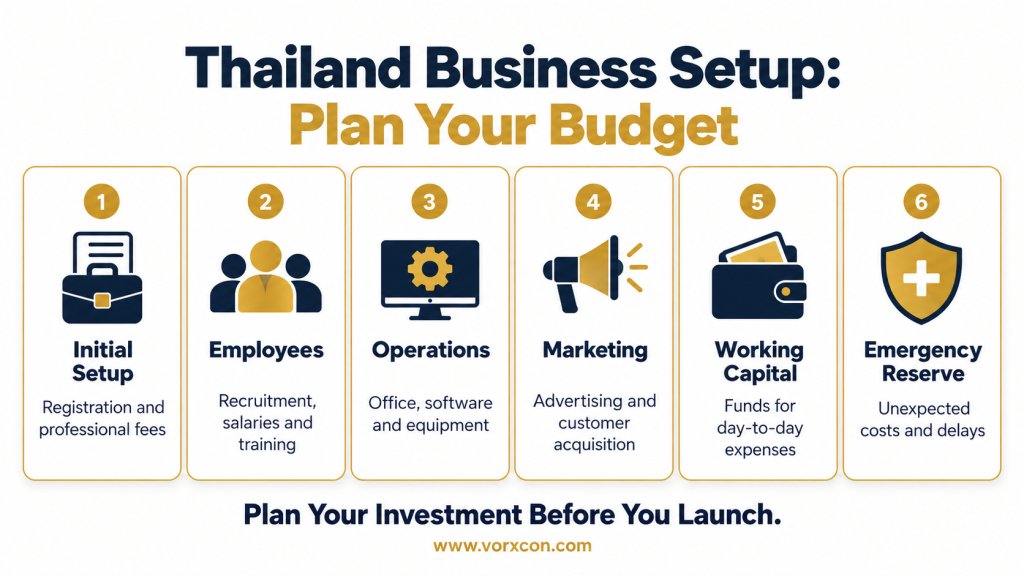
The cost of starting a business in Thailand includes more than registration fees. You also need enough funding to cover operating expenses while building your customer base. Consider these major cost categories:
Expense | What to include |
Initial setup | Registration and professional assistance |
Operations | Office, software and equipment |
Employees | Recruitment, salaries and training |
Marketing | Advertising and customer acquisition |
Working capital | Expenses before revenue becomes consistent |
Emergency funds | Unexpected costs and delays |
Recommended Reading:
Before choosing your business structure, understand the conditions under which foreigners can own 100% of a company in Thailand. Read our guide to 100% Foreign Ownership in Thailand
5. Assess Whether Your Business Can Operate Sustainably
A business may have a promising market but still struggle if its daily operations are not properly planned. Before launching, consider how you will deliver products or services consistently and manage unexpected problems.
For a trading business, this may involve finding reliable suppliers, arranging shipping, understanding customs procedures, and managing inventory. A service business may need qualified employees, suitable technology, and dependable client communication. Ask yourself a few practical questions:
- Can you find reliable suppliers or qualified employees?
- How will you receive customer payments and pay business expenses?
- Can you deliver products or services on time?
- What will happen if costs increase or a supplier fails?
6. Review Legal and Regulatory Requirements Before Registration
Once your business model and budget are clear, consider any legal and regulatory aspects applicable to the intended business model. Instead of using a generic checklist, one must consider the aspects in relation to the planned business strategy and operations.
- Before proceeding, make sure you have considered:
- Ownership – is your intended ownership structure compatible with the planned scope of operations?
- Licensing – does your business model require any specific approvals?
- Tax liabilities – do you fully understand the registration, accounting and reporting obligations?
- Professional consultation – will you need the assistance of a local expert to help you navigate the process?
Choose the Right Country for Your Global Business Expansion. Get expert guidance from Vorx Consultancy on company formation, tax, and compliance.
Contact Us: https://www.vorxcon.com/contact-us/
How Vorx Can Help With Your Thailand Company Setup?
Coming up with a strategy for overseas business development involves a number of commercial and regulatory considerations. Vorx Consultancy assists entrepreneurs and established businesses with analyzing the scope of activities, understanding the intricacies of company formation and compiling documentation and legal requirements for overseas operations.
Our professionals will help you determine the nature of your planned activities, assess your company formation requirements and determine the necessary steps for engaging a foreign market. We understand the complexities of international business setup and help our clients navigate the process and make informed business decisions.
Planning to expand into Thailand? Contact Vorx Consultancy to discuss your international business plans.
Book a Strategy Call: (Calendly Link)
Visit: www.vorxcon.com
Email: support@vorxcon.com
Final Thought
Setting up a business in another country is not a simple process. A clear idea of a business plan, an understanding of the likely customers, the appropriate ownership structure, and securing the required resources are all essential aspects that require consideration and research.By following this six-step guide, you will understand the viability of your project and the potential risks down the line. It will become clear whether the initial plans are viable and what aspects might need adjustment.