

Choosing the right country to reside may give opportunities for your career, business and family. However, it is important to note that if a country offers an appealing lifestyle then they may charge high living costs, have strict residency terms or unsuitable tax laws. When choosing a country to live in you should consider the requirements for residency visas, income requirements, healthcare availability, family rights and long term residency options. This will ensure that you do not make any costly mistakes and know what country will be suitable for you.
Planning to relocate abroad? Contact Vorx Consultancy for guidance on residency visa options
1. Check Your Residency Visa Eligibility
The first thing to consider is what type of residency you qualify for. Different countries often offer different types of residency such as working, business, investing, family or retirement.You will need to consider what you qualify for. This could be having a job offer, proof of independent income, business documents, investment or a qualifying family member. For example, Portugal has a specific residency visa for those who wish to work independently or invest as an entrepreneur. Don’t simply choose a country based on the name of the visa category. Always check the official criteria for eligibility.
2. Understand the Financial Requirements
When applying for residency, you may have to show that you can support yourself and any dependents. This will vary depending on the country and visa category.Check these costs before applying:
- Minimum income or savings requirements
- Investment requirements
- Application, residency and renewal fees
- Accommodation costs
- Family costs
Canada’s Express Entry process, for example, requires proof of funds for applicants in certain categories. The required amount depends on family size and the rules of the relevant programme. Make sure you can document the source and availability of your funds, not just show a balance in your account.
Planning to relocate abroad? Contact Vorx Consultancy for guidance on residency visa options
3. Compare the Cost of Living
Even if a country is known for being affordable it may be expensive in the area you want to live in. Look into how much it would cost to rent a property, transport, food, utility bills and schooling.Prepare a monthly budget covering:
- Rent, deposit and household bills.
- Groceries and transport.
- Healthcare and insurance.
- School fees, childcare and other family expenses.
- Travel to your home country.
If your income isn’t in the local currency then you’ll also need to consider exchange rates. Ensure you have a budget to cover your everyday costs plus any unexpected expenses in the first few months.
Recommended Reading:
Before choosing a country for long-term residency, review the eligibility criteria and available settlement routes. Read our guide on how to check your PR eligibility before choosing a country to understand the factors that may affect your permanent residency options.
4. Review Tax Rules and Financial Obligations
Don’t simply look at the tax rates for the country. Look into whether you’ll have to pay tax on employment income, business profits, investments, rental income and income from abroad. It’s important to note that Immigration residency and Tax residency will not always be the same thing.
For example, in the United States there are different residency rules for taxation purposes set by the Internal Revenue Service. They have rules such as the Green Card Test and Substantial Presence Test. Before moving to a new country see if you’ll have to file taxes in your new country and your home country. Business owners and those with investments abroad may need to seek individual tax advice.
Recommended Reading:
Before relocating to another country, understand how your move could affect your tax residency, foreign income and reporting obligations. Read our international tax planning guide to learn what to consider when managing your tax responsibilities across countries.
5. Check Healthcare and Insurance Access
Healthcare eligibility can affect both your budget and your visa application. Some residence routes require private health insurance, while access to public healthcare depends on the country and your status. Before applying, confirm:
- Whether insurance is compulsory for your visa.
- When you become eligible for public healthcare.
- Whether your policy covers dependents.
- How pre-existing conditions, prescriptions and emergency treatment are handled.
In Australia, many visitors are not eligible for Medicare and may be responsible for their own medical costs. Some visa holders must maintain adequate health insurance throughout their stay. Check the actual policy requirements for your intended visa rather than assuming your existing insurance will be accepted.
Planning to relocate abroad? Contact Vorx Consultancy for guidance on residency visa options
6. Consider Family and Dependant Rights
If you plan to relocate with your family, check whether your spouse or partner and children can apply with you or need separate applications. Confirm whether dependants can work, attend school or access healthcare, and whether their applications require additional funds or documents. Family reunification rules vary by destination and residence category. Consider the family’s long-term needs, not just whether they can enter the country with you.
7. Understand Renewal and Physical Stay Rules
Once you have your residency permit you need to know what conditions you need to follow to keep it. Find out how long it is valid for, how long you have to renew it, how long you can be away from the country and if you need to continue working, running a business or investment. Some will also have conditions to prove you still meet the original criteria.
Ensure you have copies of your residency permit, travel documents and supporting documents. Don’t leave it until the last minute to sort out your renewal.
Planning to relocate abroad? Contact Vorx Consultancy for guidance on residency visa options
8. Evaluate Permanent Residency and Citizenship Options
If you want to settle in the country then see if your visa will lead to Permanent Residency or Citizenship. Not all temporary residency permits will have a direct route. Look at how long you’ll need to live there, language/integration tests, income requirements and how long you can be away. For example, the UK has specific continuous residency rules. How long you can be away will depend on the route. Permanent residency and Citizenship should be seen as separate milestones. Ensure you know the current rules for your specific route.
9. Assess Safety, Lifestyle and Business Opportunities
You might also want to consider how living somewhere will fit in with your lifestyle and overall plans. Think about what the actual living situation is like and don’t be tempted to go for the most popular countries. Look at how safe it is for you personally, the language, transport links, job opportunities and business rules. If you plan on running a company then checking your status gives you permission to work on your own or run a business.
If possible try to visit the area. Sometimes countries can look good on paper but when you get there you might find things aren’t quite how you thought. You may find living there isn’t quite as appealing when you think about how you’ll live, work and the housing.
Planning to relocate abroad? Contact Vorx Consultancy for guidance on residency visa options
10. Check Documents and Application Procedures
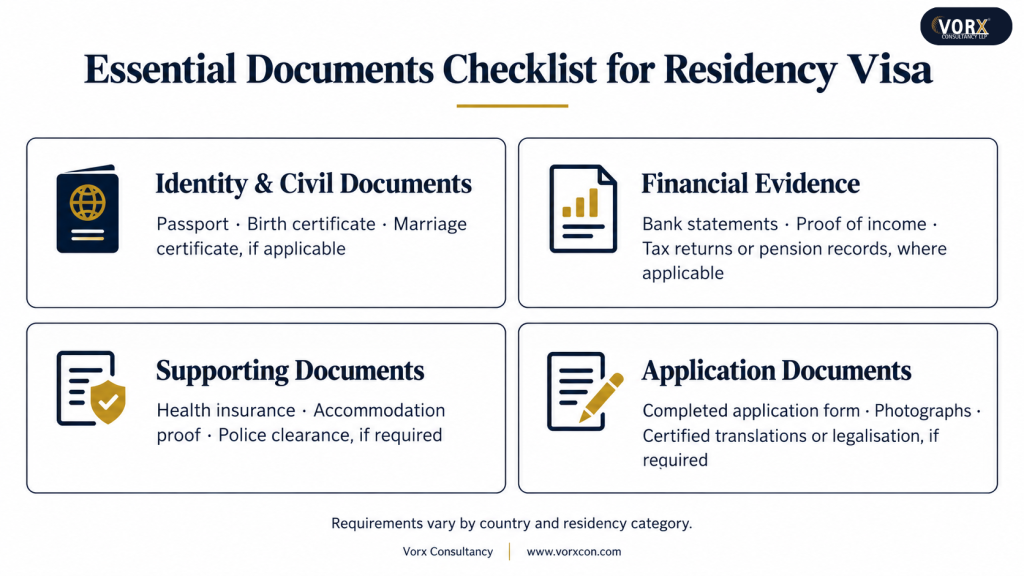
Before choosing a country, review the paperwork and application process.Depending on the type of residency you are applying for you’ll need to provide documents such as a valid passport, proof of funds, proof of accommodation, police certificates, health documents and translations. Many permanent residency applicants to Canada via the Express Entry process will need to provide documents such as police certificates. This will depend on your circumstances and category.
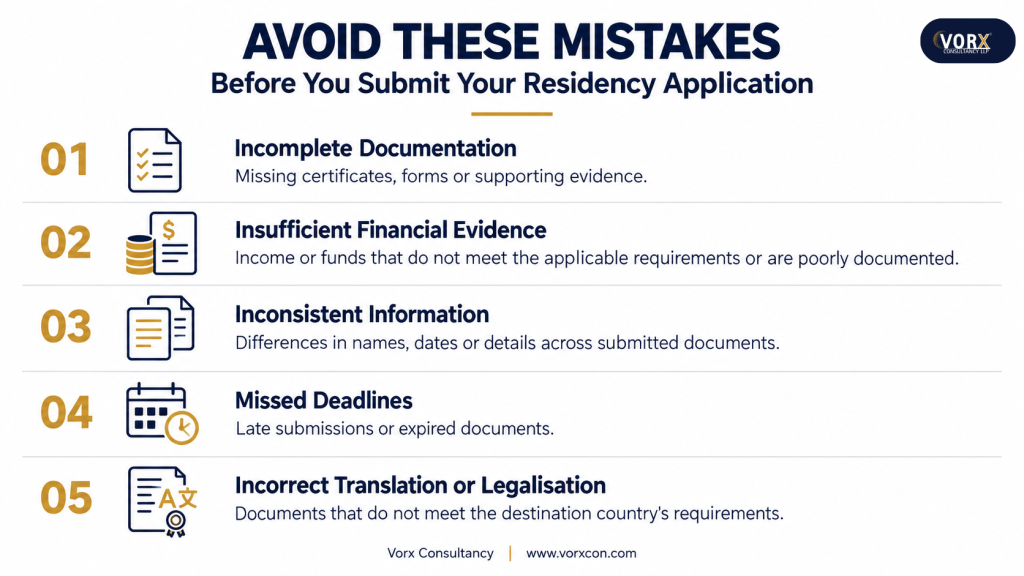
Check the current list of documents needed, where to apply, fees and processing information from the official immigration authority. Ensure your documents match and allow time to get any documents which may take several weeks
How Vorx Consultancy Can Help With Residency Planning?
Once you have chosen the right country for residency, you still need to understand what type of visa will work for you and ensure you have the correct documentation. Vorx Consultancy can help you with residency and immigration solutions for individuals, entrepreneurs and business owners.
We can help guide you through the right residency visa options for you including Portugal D7/D2 Visa, Spain Digital Nomad Visa, Spain Highly Qualified Professional Visa and any other eligible residency options. We can also help you set up your company globally, help you expand your business internationally, help with banking, and understand your tax and compliance requirements. This will help you understand the process.
If you are comparing countries for residency, you can contact Vorx Consultancy to discuss your requirements and understand the available options.
Book a Strategy Call: (Calendly Link)
Visit: www.vorxcon.com
Email: support@vorxcon.com
Final Thought
Choosing the right country for residency requires more than comparing visa options. Consider your financial situation, family needs, tax obligations and long-term settlement goals before making a decision. By reviewing these factors in advance you can avoid making any common mistakes and pick the right option for you. If you do your research then you can feel more confident when moving abroad and plan your move smoothly.