
The idea of entering a foreign market is not as simple as picking a place to sell a product and registering a company. The choice of the entity structure at the start of the process shapes the ownership structure, decision-making mechanism, tax obligations, banking needs, liability, and many other important factors influencing the company’s operations and future growth.
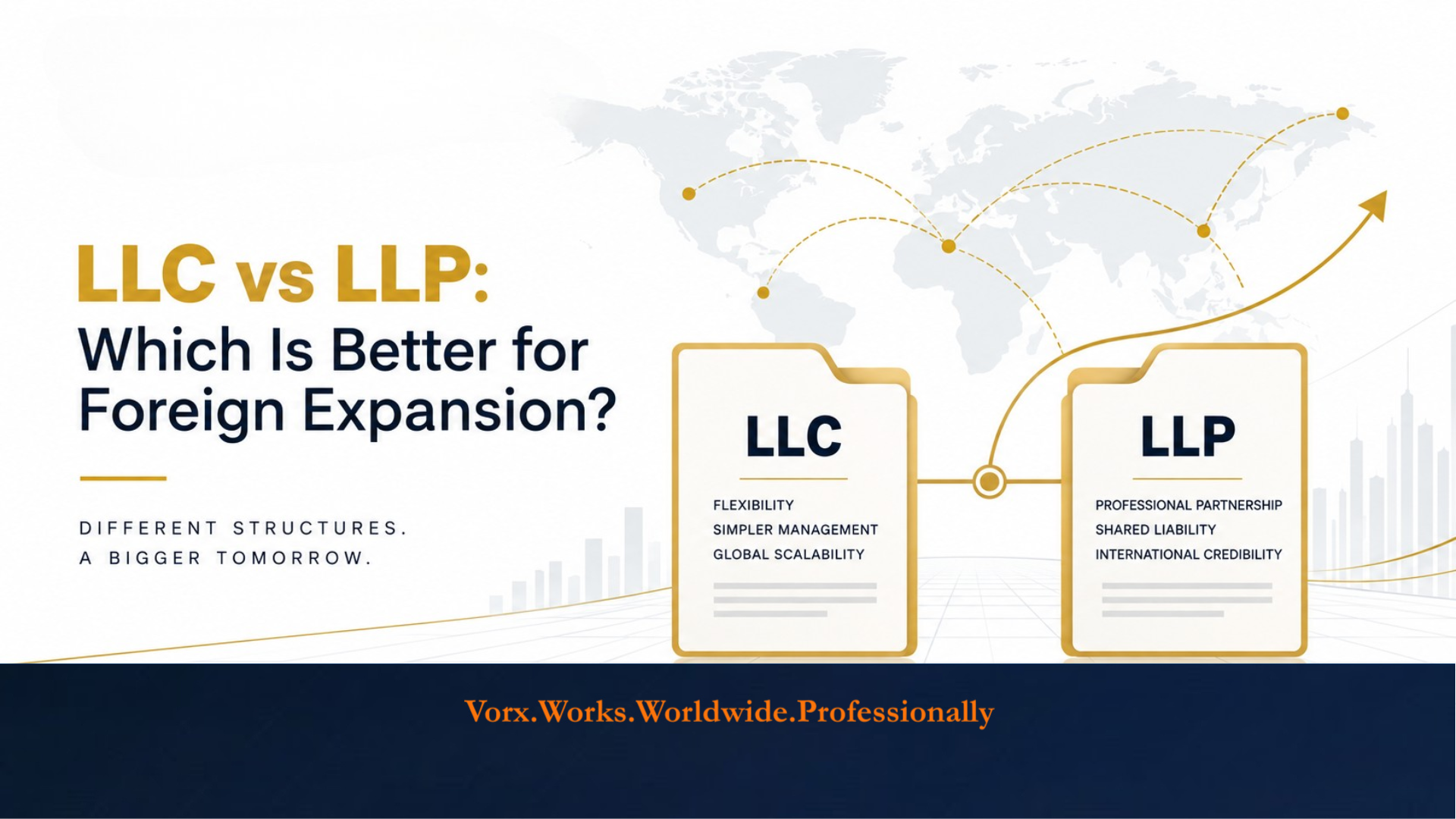
While limited liability companies (LLC) and limited partnership companies (LLP) both provide owners with limited liability coverage, they serve different purposes. An LLC is normally more appropriate for a commercial business controlled by its owner, whereas an LLP is better suited for a partnership controlled by its stakeholders. Nevertheless, particular nuances may depend on the jurisdiction, which should be taken into consideration when selecting the most suitable option.
What Is an LLC?
A Limited Liability Company, or LLC, is a separate business structure owned by one or more members. Depending on the jurisdiction, it may be managed directly by its members or by appointed managers.
LLCs are commonly used by online businesses, trading companies, agencies, technology businesses and other commercially operated ventures. Their management flexibility makes them useful for foreign founders who want to retain control without personally managing every part of the overseas operation.
What Is an LLP?
A Limited Liability Partnership, or LLP, combines partnership-based management with limited liability protection. It usually requires at least two partners, although partner eligibility and residency conditions depend on the country.
The partners define their responsibilities, decision-making powers, capital contributions and profit-sharing arrangements through an LLP agreement. This structure is commonly used by consultants, accountants, advisers and other professional-service businesses.
Ownership and Foreign Participation
LLC: An LLC may permit one or more members. In jurisdictions allowing single-member LLCs and full foreign ownership, one foreign founder can own the entire business without adding another person purely to meet an ownership requirement.
LLP: An LLP generally requires at least two partners. Some jurisdictions may also require a resident or designated partner responsible for regulatory filings and ongoing compliance.
Practical difference for foreign expansion: An LLC may suit an individual founder launching an overseas e-commerce or technology business. An LLP may be more appropriate when two or more professionals are entering the market together and will actively operate the business.
Management and Decision-Making
LLC: Management responsibilities are normally defined through an operating agreement. The LLC may be managed by its members or by appointed managers, allowing ownership and daily management to remain separate.
LLP: Partners generally participate in management according to the LLP agreement. This agreement should define voting rights, partner duties, authority limits and the process for resolving disagreements.
Practical difference for foreign expansion: An LLC can support centralised control when an existing company establishes an overseas operation. An LLP offers more flexibility when local and foreign partners contribute different skills and require clearly divided responsibilities.
Recommended Reading:
Entrepreneurs considering a US LLC should also understand the available visa pathways and the difference between company ownership and immigration status.
Liability and Commercial Risk
LLC: Members are generally protected from personal responsibility for the company’s debts and contractual obligations. The liability normally remains with the business entity.
LLP: Partners typically receive protection from business debts and may also be protected against liabilities created by other partners. However, a partner can remain responsible for their own negligence, misconduct or unauthorised actions.
Practical difference for foreign expansion: An LLC may provide a clearer separation between foreign ownership and local commercial operations. An LLP can be useful where each partner wants protection from risks created by another partner.
Taxation and Profit Repatriation
LLC: Depending on the country, an LLC may be taxed as a separate entity or treated as tax-transparent, with profits attributed to its members. In some jurisdictions, LLCs can choose between available tax classifications.
LLP: An LLP is commonly treated as tax-transparent, meaning partners pay tax on their respective profit shares. However, some jurisdictions may tax the LLP itself or apply additional conditions.
Practical difference for foreign expansion: A structure treated as tax-transparent in the host country may not receive the same treatment in the owner’s home country. Founders must therefore consider corporate tax, personal taxation, withholding tax, double-taxation treaties, transfer pricing and profit-repatriation rules before deciding.
Compliance and Operating Responsibilities
LLC: Ongoing requirements may include maintaining a registered office, renewing business licences, filing annual reports, keeping financial records and reporting beneficial ownership information.
LLP: Compliance may include maintaining an LLP agreement, preparing accounts, filing annual returns and reporting changes in partners, registered addresses or ownership details. Designated partners may carry additional legal responsibilities.
Practical difference for foreign expansion: An LLP may appear simpler to operate in some jurisdictions, but it is not compliance-free. An LLC may involve more formal reporting, depending on where it is registered. Founders should compare total annual obligations rather than incorporation fees alone.
Recommended Reading:
Comparing an LLC and LLP is only one part of expansion planning—Indian entrepreneurs should also assess how company structures, taxation and compliance differ between Spain and the UAE.
Funding and Future Growth
LLC: An LLC can admit additional members and provide flexible ownership arrangements. However, institutional investors may sometimes prefer a share-based corporate structure, particularly where multiple funding rounds are planned.
LLP: An LLP does not normally issue shares. Capital is generally introduced by partners, and profit rights are governed by the partnership agreement. This can make conventional equity investment more difficult.
Practical difference for foreign expansion: An LLC may be better for a commercial business expecting new owners or broader expansion. An LLP is generally more suitable for a partner-funded professional business that does not depend on external equity investment.
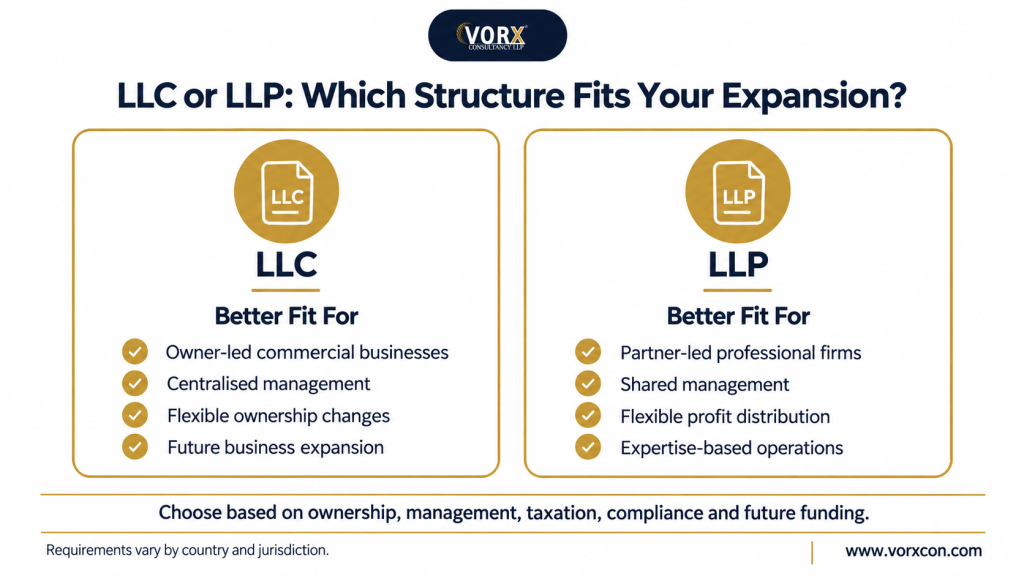
When Should You Choose an LLC?
An LLC may be the better choice when:
- One founder wants to retain ownership and control.
- The business will trade, employ staff or sign commercial contracts.
- Centralised or manager-led operations are required.
- New members may join later.
- The business expects to expand across multiple markets.
When Should You Choose an LLP?
An LLP may be suitable when:
- Two or more active partners will operate the business.
- The business provides consulting or professional services.
- Flexible profit sharing is important.
- Partner roles need to be contractually defined.
- External equity investment is not a priority.
The Practical Decision: LLC or LLP?
The decision should be based on how the overseas business will be owned, managed and funded not simply on which structure is easier to register.
An LLC is generally a stronger fit for a commercially operated business that requires centralised control, management flexibility and the ability to introduce new owners. An LLP may be more appropriate where two or more professionals will actively manage the business and require flexible arrangements for responsibilities and profit sharing.
Before choosing, assess foreign ownership rules, local management requirements, tax classification, banking eligibility, regulatory obligations and future funding plans in both the host country and the owners’ home country.
How Vorx Supports LLC and LLP Formation Abroad?
Vorx Consultancy supports businesses throughout the LLC or LLP formation process, from selecting a suitable jurisdiction and structure to completing registration and preparing for operations.
Support may include:
- Comparing LLC and LLP options based on business activity
- Reviewing foreign ownership and local management requirements
- Preparing and coordinating formation documents
- Supporting operating or LLP agreement requirements
- Assisting with banking preparation and account-opening documentation
- Coordinating accounting, tax and ongoing compliance requirements
Vorx helps ensure that the selected structure supports the business’s ownership model, operational needs and long-term international expansion plans.
Choose the right structure for your foreign expansion—consult Vorx Consultancy today.
Book a Strategy Call: (Calendly Link)
Visit: www.vorxcon.com
Email: support@vorxcon.com
Final Thoughts
Neither an LLC nor an LLP is universally better for foreign expansion. An LLC may offer greater flexibility for owner-led commercial operations, while an LLP may provide a better framework for partner-managed professional businesses.
The appropriate choice is the structure that supports the company’s present operations without restricting future ownership, funding or international growth. A decision made only on the basis of lower formation costs can create avoidable tax, banking and compliance issues later.