

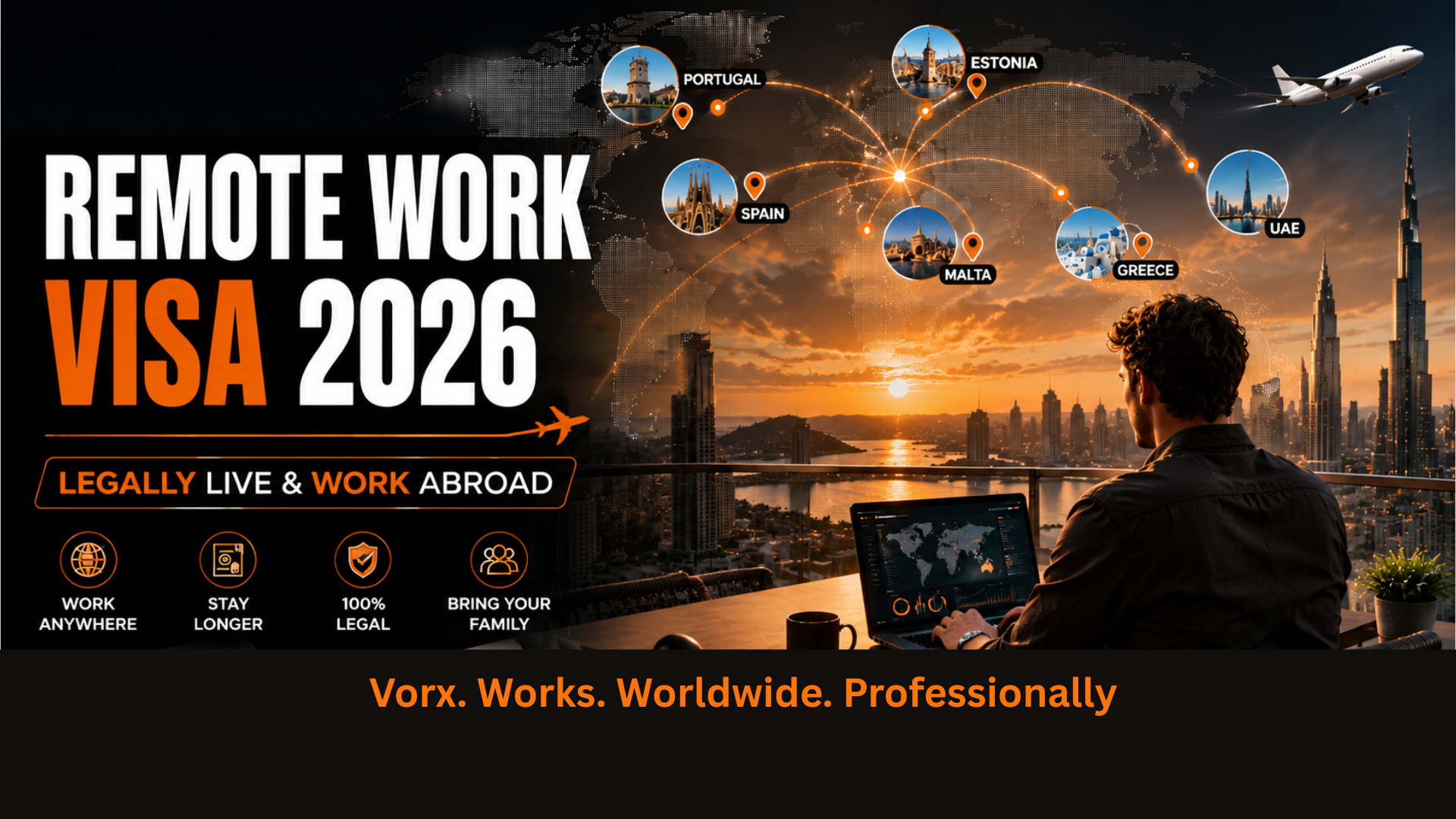
Five years ago, working from another country seemed like a luxury. Today, it is becoming the norm.
An Indian designer can work with a European company. A Dubai-based consultant can manage clients spread across three continents. A startup founder can build a global business without being tied to a single location.
But there is an important question that many remote professionals forget to ask:
Can I legally work while living in another country?
A tourist visa may grant you entry into a country, but it generally does not permit you to work remotely for your employer or clients.
This is where the remote work visa comes in handy.
Countries around the world are creating new visa programs to attract skilled professionals, freelancers, entrepreneurs, and digital workers. They want global talent. They want people who bring income, skills, and business opportunities.
But choosing the right visa isn’t always easy.
Every country has different rules and varying income requirements. Tax systems differ as well.
In this guide, we will explain how remote work visas work, who is eligible to apply for them, and what professionals should keep in mind before moving abroad.
What Is a Remote Work Visa?
Just imagine.
You are a freelance developer working with clients in the US and Europe. You want to spend a year in Spain or Dubai while continuing your work.
A remote work visa allows you to do exactly that—and legally, too.
A remote work visa is a special type of residence permit that allows individuals to earn an income from a remote job, freelance work, or an online business while living in another country.
This is different from a tourist visa.
A tourist visa is designed for travel.
A remote work visa is designed for professionals who wish to stay for an extended period and continue their work while complying with local immigration regulations.
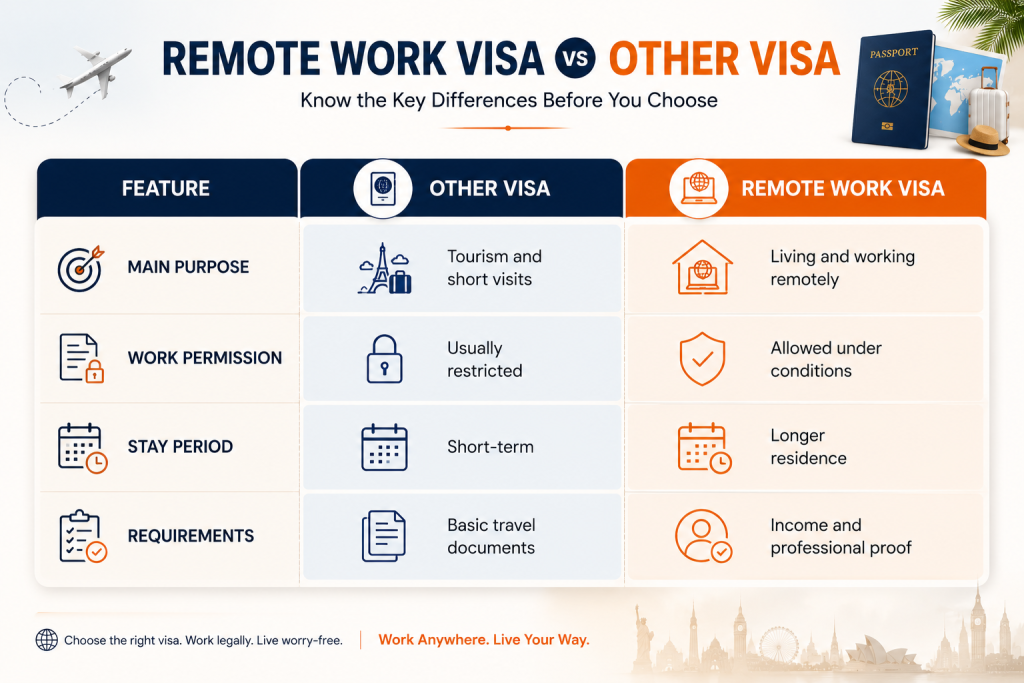
Remote Work Visa vs Other Visa
Vorx Consultancy Pro Tip:
Many remote workers make the mistake of moving to a country on a tourist visa and assuming that permission to work remotely is automatically granted. Immigration rules matter.
Who Should Consider a Remote Work Visa?
A remote work visa is not only for digital nomads carrying a laptop from one country to another.
Today, many different types of professionals are considering these options.
Freelancers Working With Global Clients
Freelancers are among the largest groups benefiting from remote work visas.
Think about it:
- Software developers
- Graphic designers
- Marketing experts
- Consultants
- Writers
- Online service providers
A freelancer may have clients in multiple countries. A remote work visa can provide legal stability while continuing those professional relationships.
Employees Working Remotely
Remote jobs have changed traditional employment.
Many companies now allow employees to work from different locations.
For example:
A marketing manager employed by a UK company may want to spend a year working from Portugal.
A remote work visa can help create a legal structure for such arrangements.
Usually, applicants need:
- Employment proof
- Employer confirmation
- Income documents
- Health insurance
Entrepreneurs and Online Business Owners
Business owners are also exploring international mobility.
An online agency owner, e-commerce entrepreneur, or consultant may want to operate from another country.
The benefits can include:
- Better lifestyle opportunities
- Access to international markets
- Global networking
- Business expansion possibilities
Remote Work Visa vs Digital Nomad Visa vs Freelance Visa
These terms often create confusion.
They sound similar. But they are not always the same.
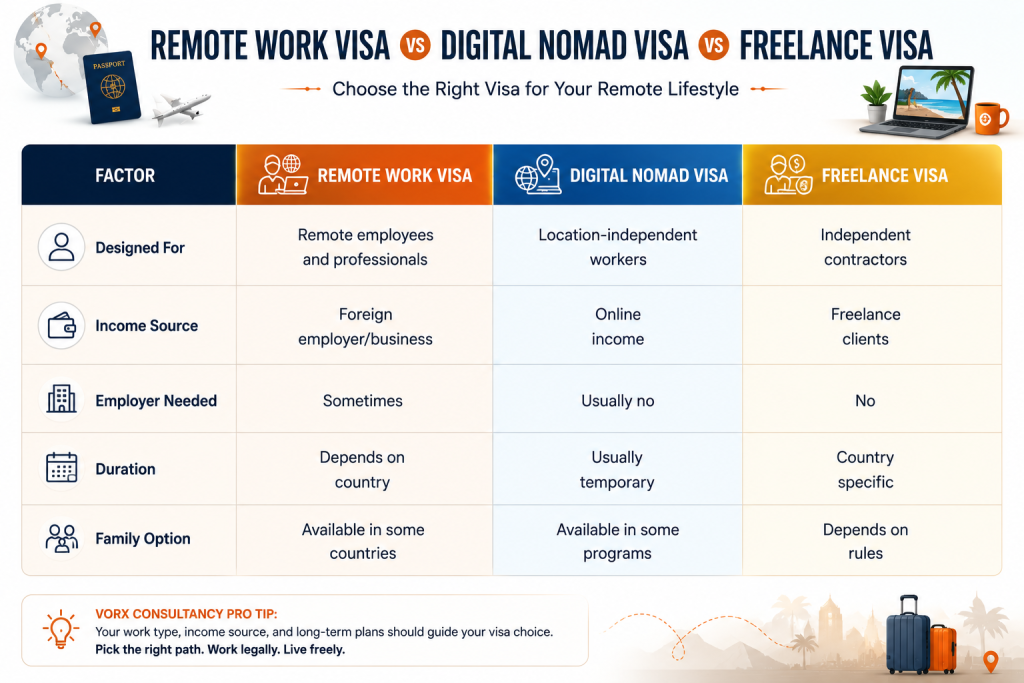
The right choice depends on your situation.
A freelancer may need a different visa compared to someone working full-time for a foreign company.
Choosing the wrong option can create problems later, especially with taxes and residency.
Also Read : Investor Visa vs Employment Visa: Which One Actually Suits Your Goals? (2026 Guide)
Best Countries Offering Remote Work Visas in 2026
More countries are competing for global professionals.
They are not just offering visas. They are creating lifestyle opportunities.
Spain
Spain attracts remote workers with its lifestyle, infrastructure, and access to the European market.
It is popular among professionals looking for a balance between work and quality of life.
Portugal
Portugal continues to attract international professionals because of its welcoming environment and global community.
UAE (Dubai)
Dubai has become a major destination for entrepreneurs and remote professionals.
Its business-friendly environment, global connectivity, and modern infrastructure make it attractive for international talent.
Estonia
Estonia is known for its digital ecosystem.
It appeals especially to technology professionals and online entrepreneurs.
Malta and Greece
These destinations attract professionals looking for European lifestyle options combined with remote work flexibility.
What Do You Need for a Remote Work Visa?
Requirements depend on the country.
But most applications usually require similar documents.
Proof of Income
Countries want to know that you can support yourself.
Common examples:
- Bank statements
- Salary records
- Client invoices
- Business income proof
Proof of Remote Work
You may need:
- Employment contracts
- Freelance agreements
- Business documents
Health Insurance
Many countries require valid health coverage during your stay.
Personal Documents
Usually required:
- Passport
- Photos
- Police clearance
- Application forms
- Accommodation details
Remote Work Visa and Tax: What Should You Know?
This is where many professionals get confused.
Getting a visa does not automatically solve tax matters.
You may still need to understand:
- Tax residency rules
- Foreign income reporting
- Double taxation agreements
- Local compliance requirements
For example, staying in a country for a longer period may create tax responsibilities depending on local laws.
Immigration and taxation should always be planned together.
Vorx Consultancy Pro Tip:
A successful relocation is not only about getting approval. It is about building a compliant international lifestyle.
Can Your Family Join You?
Many remote workers do not relocate alone.
They move with:
- Spouse
- Children
- Dependents
Some countries allow family members under dependent permits.
However, requirements can vary.
Before choosing a destination, consider:
- Education options
- Healthcare
- Family eligibility
- Long-term settlement plans
Can a Remote Work Visa Lead to Permanent Residency?
This is one of the most important questions.
The answer depends on the country.
Some remote work visas are temporary lifestyle programs.
Others may connect with longer-term residency pathways.
Before applying, think beyond the first year.
Ask yourself:
- Do I want temporary relocation?
- Do I want permanent settlement?
- Do I want opportunities for citizenship?
Your long-term goals should influence your decision on which visa to choose.
Common Mistakes Remote Workers Make
Many applicants focus solely on obtaining the visa.
They forget what comes after.
Common mistakes include:
- Choosing a country only because it looks attractive online
- Ignoring tax responsibilities
- Submitting incomplete financial documents
- Assuming tourist visas allow remote work
- Not considering future residency plans
Planning ahead saves time and avoids unnecessary complications.
How to Choose the Right Remote Work Visa?
There is no single “best” visa.
The right choice depends on your profile.
If you are a freelancer: Look for countries that support independent professionals.
If you are a remote employee: Check if your employment arrangement is accepted there.
If you own a business: Consider residency options that are favorable for businesses.
If your goal is permanent settlement: Focus on countries that offer pathways for long-term stays or permanent residency.
How Vorx Consultancy Can Helps Professionals Relocate Globally
Moving abroad is a major decision.
It involves immigration, compliance, documentation, and future planning.
At Vorx Consultancy, we help professionals and entrepreneurs understand global mobility options through a structured approach.
Our support includes:
- Visa eligibility assessment
- Country comparison
- Documentation guidance
- Immigration assistance
- Compliance planning
- International relocation strategy
Every professional has a different journey.
The right visa depends on your career, income, family situation, and future goals.
Ready to explore your remote work relocation options?
Connect with Vorx Consultancy and build a global mobility strategy that fits your goals.