
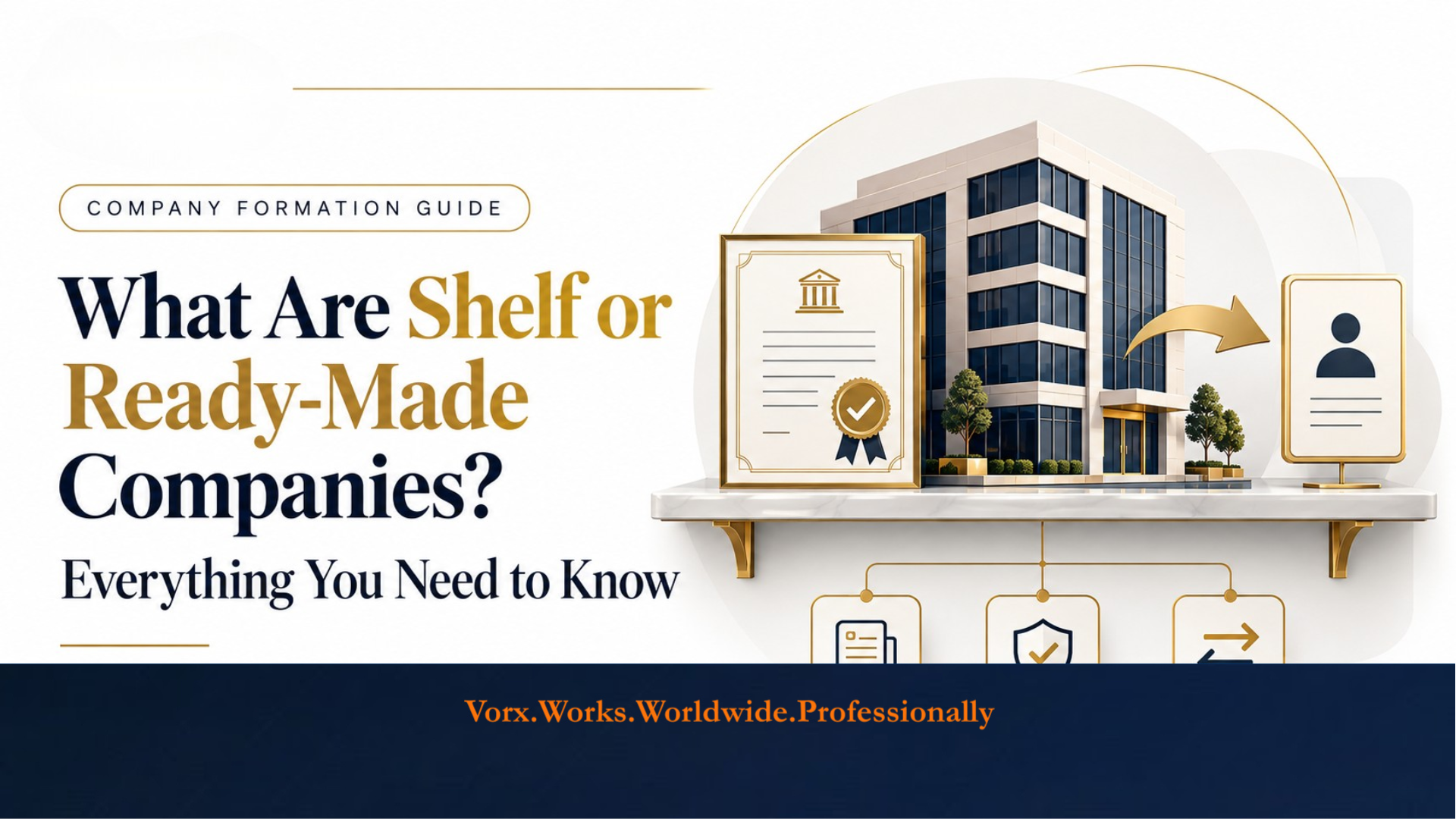
Suppose you need a company in another country for an upcoming business opportunity. Registering a new one is an option, but you may also find companies that have already been incorporated and are available to buy. These are called shelf companies.A ready-made or shelf company offers an entity that is already registered, which can be useful when timing or the date of incorporation matters.
But the decision of buying a shelf company requires attention. Buyers need to understand the company’s history, the cost of transferring it and the steps required before it can operate. This guide explains what the shelf companies are? and what to review before choosing one?.
What Is a Ready-Made or Shelf Company?
A ready-made company, also known as a shelf company, is an entity incorporated in advance and held for sale to a future owner. It has a legal registration date but is generally intended to remain inactive until a buyer acquires it. Following the purchase, the buyer completes the required ownership and management changes before using it for business.
Shelf companies can be newly incorporated or several years old. An earlier incorporation date, however, should not be confused with an operating history. A company that has never traded has no established record of revenue, customers or completed work, regardless of when it was registered.
Plan your move with Vorx Consultancy · www.vorxcon.com
Why Do Business Owners Buy Shelf Companies?
Business owners usually consider a shelf company when an existing entity offers a clear advantage over forming a new one. The potential benefits include:
- Faster access to an incorporated entity: Registration has already been completed. This can help when a business opportunity has a fixed deadline, though ownership transfer and other setup steps still take time.
- An earlier incorporation date: Some contracts or applications require a company to have been registered for a minimum period. A shelf company may meet that condition if registration age is what matters. It will not help where actual trading history is required.
- A starting point for international expansion: Acquiring an entity in the target country may help a founder proceed with local business plans once the transfer is complete. The company’s legal form and records must still suit the intended activity.
- Existing company records: Incorporation documents and previous filings are available for review before purchase. These give buyers a basis for assessing the entity, provided the records are complete and independently checked.
Recommended Reading:
Buying an existing company may save setup time, but its legal structure must still fit your business. Read our LLC vs LLP guide to compare ownership, management and ongoing obligations before choosing an entity.”
How to Buy a Ready-Made Company: Step-by-Step
The shelf company buying process differs by jurisdiction, but the practical sequence is usually:
- Define your purpose. Choose the country, company type and business activity. Identify why you need an existing company.
- Shortlist companies. Compare incorporation dates, names, legal forms and current registry status.
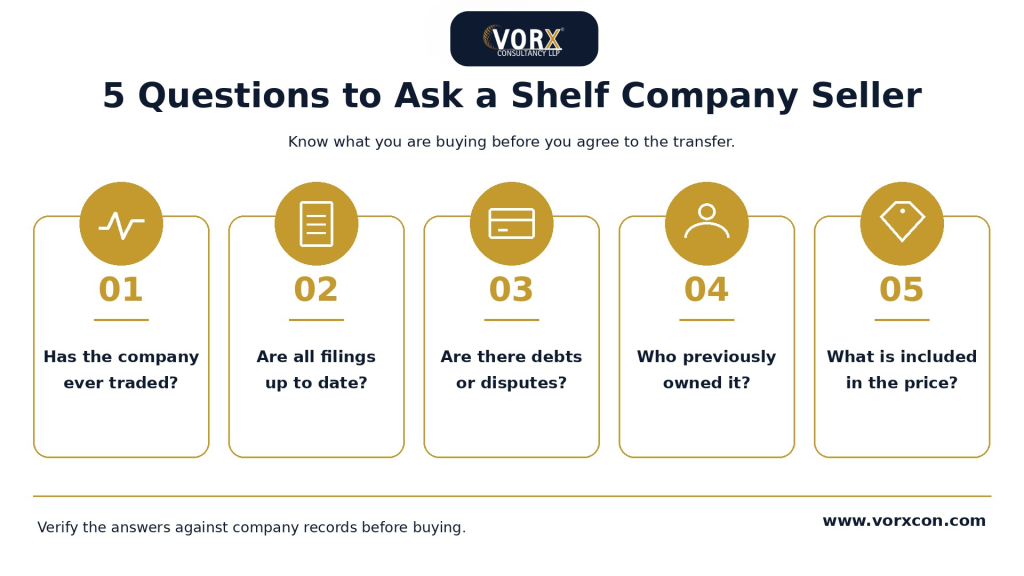
- Check the history. Review filings, past owners, tax position and any signs of debts, disputes or previous trading.
- Confirm the terms. Get the full price, included services and transfer responsibilities in writing.
- Complete the transfer. Sign the required documents and update ownership, directors and other company records under local rules.
- Set up operations. Complete any separate banking, tax, licensing or address requirements before trading.
An independent local legal or accounting review is particularly valuable before you pay for a company abroad.
Plan your move with Vorx Consultancy · www.vorxcon.com
What Is the Full Cost of Buying a Shelf Company?
Cost | What to confirm |
Purchase price | Does the price increase with company age? |
Due diligence | Are legal and accounting checks included? |
Transfer | Who pays for documents and registry filings? |
Changes | Are name, address or director updates included? |
Ongoing costs | What are the annual accounting, filing and address fees? |
Compare the total cost of buying a shelf company with the cost of new incorporation. Paying a premium for age makes little sense if it does not help you meet a real requirement.
Recommended Reading:
A faster purchase can still lead to the wrong setup. Read our guide to company formation mistakes abroad before committing to an entity.
What Documents Do You Receive When Buying a Shelf Company?
The document package depends on the jurisdiction and the seller. Ask for it before committing to a purchase. It should allow you to establish the company’s identity, ownership and filing history.
Documents to request include:
- Certificate of incorporation and registration details.
- Constitutional documents, such as articles of association where applicable.
- Director and shareholder records.
- Available accounts, returns and other statutory filings.
- Signed purchase and ownership transfer documents.
Check these against official registry information where available. A complete-looking folder is no substitute for verifying whether its contents are accurate and current.
Plan your move with Vorx Consultancy · www.vorxcon.com
Things to Keep in Mind Before Buying a Shelf Company
Buying a shelf company means taking ownership of an entity with an existing history. That history needs careful review, even if the seller describes the company as dormant or unused. Before paying, confirm what you are acquiring and whether it will meet your business needs.
- Trading history: Verify whether the company has conducted any business, issued invoices or entered into contracts.
- Outstanding liabilities: Check for unpaid debts, penalties, disputes or other obligations that could affect the company.
- Filing record: Review annual accounts, returns and other required filings for missing or overdue submissions.
- Tax status: Establish whether the company has registered for taxes, filed required returns or has outstanding payments.
- Previous ownership: Review past directors and shareholders and confirm that the seller has authority to transfer the company.
- Banking: Do not assume that a bank account is included or that a new account will be approved because the company is older.
- Licences and permissions: Check whether your planned activity requires approvals that must be obtained separately.
- Value of company age: Confirm whether the client, bank or tender you are targeting accepts incorporation age alone or requires proof of actual trading.
- Total cost: Include due diligence, transfer fees, changes to company details and future compliance costs in your comparison with new incorporation.
Shelf Company vs New Company: Which Is Better?
A shelf company may be suitable when:
- An existing incorporation date meets a requirement you have confirmed.
- You have reviewed its history and found no unresolved concerns.
- The time or commercial advantage justifies the full acquisition cost.
A new company may be suitable when:
- You want to choose its name and structure from the start.
- Company age offers no clear advantage.
- You would rather begin without investigating a previous period of ownership.
Factor | Shelf company | New company |
Incorporation | Already completed | Completed for your business |
History | Must be investigated | Begins with your registration |
Name and structure | Changes may be needed | Chosen during setup |
Main advantage | Existing entity or registration date | Greater control from the outset |
How Vorx Consultancy Helps You Choose the Right Company?
A shelf company is useful only when its history, structure and cost fit your plans. Vorx Consultancy helps you compare buying an existing company with forming a new one, so you can assess which route makes commercial sense.
If you decide to explore a shelf company, we can help coordinate the review of its records, clarify the transfer requirements and plan the steps needed before it begins operating. Speak with Vorx before committing to a purchase.
Planning a company and a move abroad? Explore your options with Vorx Consultancy
Book a Strategy Call: (Calendly Link)
Visit: www.vorxcon.com
Email: support@vorxcon.com
Final Thought
A shelf company can give you an existing legal entity and, in some cases, an incorporation date that serves a specific business purpose. Its value depends on what you need the company to do, what its records reveal and how much it will cost to make it operational.
Before buying, verify its history, confirm that its age meets any requirement you are relying on, and compare the complete acquisition cost with new incorporation. The right choice is the one that supports your business plans after those checks—not simply the company with the oldest registration date.
